Where to watch the Elite Women’s World Championships live: Vollering vs Kopecky, Reusser, Blasi and Courtney?
The 2026 Road Cycling World Championship faces one of its major events this Saturday with the Women's Elite race. Demi Vollering arrives in Montreal after an exceptional season and with the possibility of completing the Giro-Tour-World triple, but the Canadian course and a list of rivals led by Lotte Kopecky, Marlen Reusser, Elisa Longo Borghini, Kasia Niewiadoma, and Paula Blasi promise to complicate any attempt to control the race.
Key points of the Women's Elite race
- Date: Saturday, September 26, 2026
- Start: Brossard
- Finish: Avenue du Parc, Montreal
- Distance: 180.4 km
- Positive elevation: 2,570 m
- Final circuit: Mont-Royal
- Circuit length: 13.4 km
- Laps of the circuit: 8
- Elevation per lap: 269 m
- Start time: 09:00 in Montreal / 15:00 (CEST)
- Expected finish time: 14:10 in Montreal / 20:10 (CEST)
- Type of course: broken and very demanding due to accumulation, with short and repeated climbs and a finish favorable for explosive and resilient riders.
- WATCH LIVE
Women's Road Cycling World Championship 2026: course, schedules, and favorites
The Women's Elite race will take place on Saturday, September 26 over 180.4 kilometers and 2,570 meters of positive elevation. The start will be in Brossard, and after an initial part through the Montérégie region, the peloton will enter Montreal to tackle eight laps of the demanding Mont-Royal circuit.

It will also be a special World Championship for Magdeleine Vallières, who surprised in Kigali a year ago to become world champion and will now have the opportunity to defend the rainbow jersey in Canada. The Canadian will be the first Women's Elite champion since Jeannie Longo in 1989 to defend the world title at home.
A Mont-Royal circuit that will wear down the race
RECOMENDADO
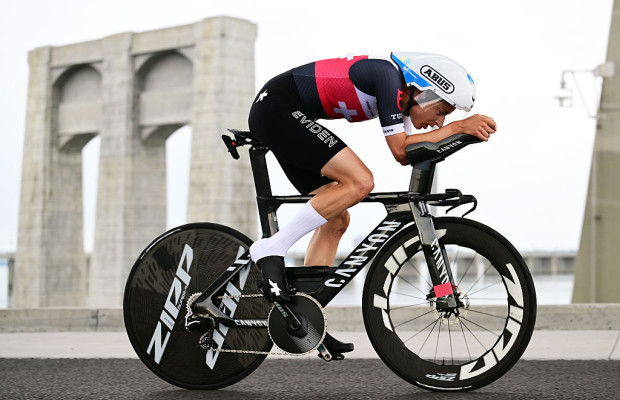
Marlen Reusser retains her time trial rainbow jersey with a masterclass in Montréal
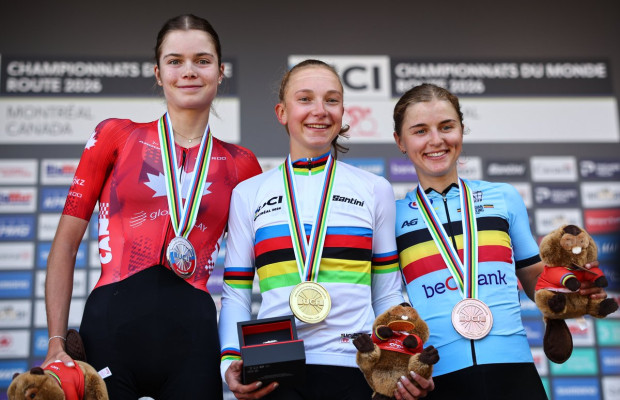
Slovakia claim the U23 rainbow jersey with Viktória Chladoňová
Goodbye to watts per kilogram as the sole benchmark—fatigue decides who’s the best
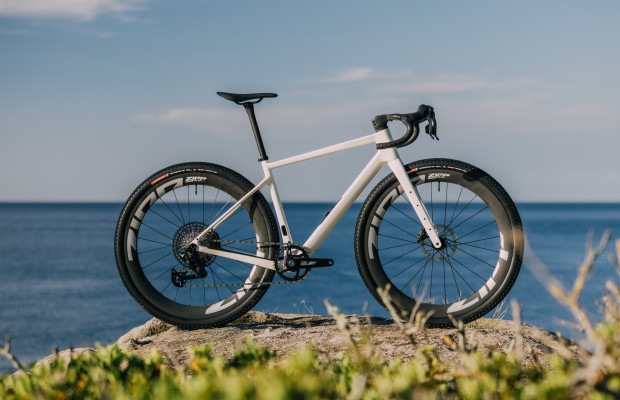
The Megamo West 2027 gets a new range from €2,399 and remains a great choice
The new cycling regulations in Spain are here: everything that changes from 1 October (this Thursday)
Evenepoel sticks with a 1x setup and a gravel front derailleur for the World Championships
The women's World Championship will have two clearly differentiated parts. The race will start in Brossard and will pass through Carignan, Chambly, and Richelieu before heading towards Montreal and crossing the St. Lawrence River via the Samuel-De Champlain bridge. From there, the true competitive core of the course will begin.
The Mont-Royal circuit measures 13.4 kilometers and accumulates 269 meters of elevation per lap. The riders will have to complete it eight times, so the repetition of efforts will likely be as important as the difficulty of each climb separately.
The Voie Camillien-Houde will be one of the main areas to select the group, but it will not be the only one. Next comes the Chemin de la Polytechnique, with ramps exceeding 11%, and then the course gains height again before leading to Avenue du Parc. The finish straight itself rises slightly, an important detail if the title is decided among a small group.
This is not a high mountain World Championship, but it also does not seem like an easy course to control. Eight laps mean continuously repeating climbs, descents, technical areas, and changes of pace. Selection may occur more due to accumulation than from a single attack.
Favorites for the women's World Championship in Montreal
Demi Vollering stands out as the main reference after a season in which she has won, among other races, the Tour of Flanders, Flèche Wallonne, Liège-Bastogne-Liège, Giro d'Italia, and Tour de France. If she wins in Montreal, she will complete the Giro, Tour, and World Championship in the same season, something that only Annemiek van Vleuten has achieved in the women's category.

Additionally, the Netherlands presents one of the strongest teams. Puck Pieterse fits particularly well in a circuit of short and explosive efforts, while Riejanne Markus offers an alternative to anticipate the movements of the main favorites.
Lotte Kopecky returns to the World Championship after not competing in the Kigali edition. World champion in 2023 and 2024, the Belgian has a particularly dangerous asset: if she manages to complete the eight laps of Mont-Royal with the best, her speed in a reduced finish could influence the strategy of the others.

Another important name is Marlen Reusser, who arrives strengthened after being crowned world time trial champion in Montreal. The Swiss has the ability to attack from afar and seek a race different from the more explosive riders. Noemi Rüegg also offers Switzerland a second option for a faster finish.
Elisa Longo Borghini is again looking for one of the few major titles missing from her palmarès. The Italian has three world bronze medals and arrives at the race in good shape after finishing fourth in the individual time trial and being part of the Italian team that won the mixed relay.
Kasia Niewiadoma-Phinney should also find favorable terrain as the race becomes tougher. This season she finished second in the Tour de France and won at Mont Ventoux, although she arrives with the uncertainty of not having competed since the Tour.
Spain will have one of its main assets in Paula Blasi. At 23 years old, she will face her second Elite World Championship after a season in which she won the Amstel Gold Race and La Vuelta Femenina, as well as the Tour Féminin des Pyrénées and the Volta a Catalunya. The explosive profile of Montreal fits with what she already showed at the Amstel. She will be accompanied by Mavi García, third in the Kigali World Championship, Mireia Benito, Usoa Ostolaza, Sandra Alonso, and Sara Martín.

We should also keep an eye on Kim Le Court, especially dangerous if she survives with the best to a reduced group; on the young Frenchwoman Célia Géry; on the reigning champion Magdeleine Vallières; and on a strong German block with Franziska Koch, Antonia Niedermaier, and Liane Lippert. One of the big dark horses could be the American Kate Courtney, who despite having just recently transitioned to road cycling and having few references, those of us who know her know that in these types of events, Courtney rises to the occasion and could surprise.

With Vollering as the main reference, but with several teams capable of proposing tactical alternatives, the eight laps of Mont-Royal should progressively reduce the group until leaving the fight for the rainbow jersey among the riders capable of combining endurance, the ability to respond to attacks, and explosiveness in short climbs.
También puede interesarte
Road
Marlen Reusser retains her time trial rainbow jersey with a masterclass in Montréal
Road
Slovakia claim the U23 rainbow jersey with Viktória Chladoňová
Road
Goodbye to watts per kilogram as the sole benchmark—fatigue decides who’s the best
Gravel
The Megamo West 2027 gets a new range from €2,399 and remains a great choice
Road
The new cycling regulations in Spain are here: everything that changes from 1 October (this Thursday)
Road
