Trek presents its new XCO and announces that you might never be able to buy it
The Trek-Unbroken XC team is competing this season with a bike that is very different from any current model in the brand's catalog. It is a prototype cross-country bike developed from scratch, specifically designed to respond to the technical evolution of the World Cup circuits. The surprising thing is that the brand has just officially presented this prototype and warns that it may never reach the market.
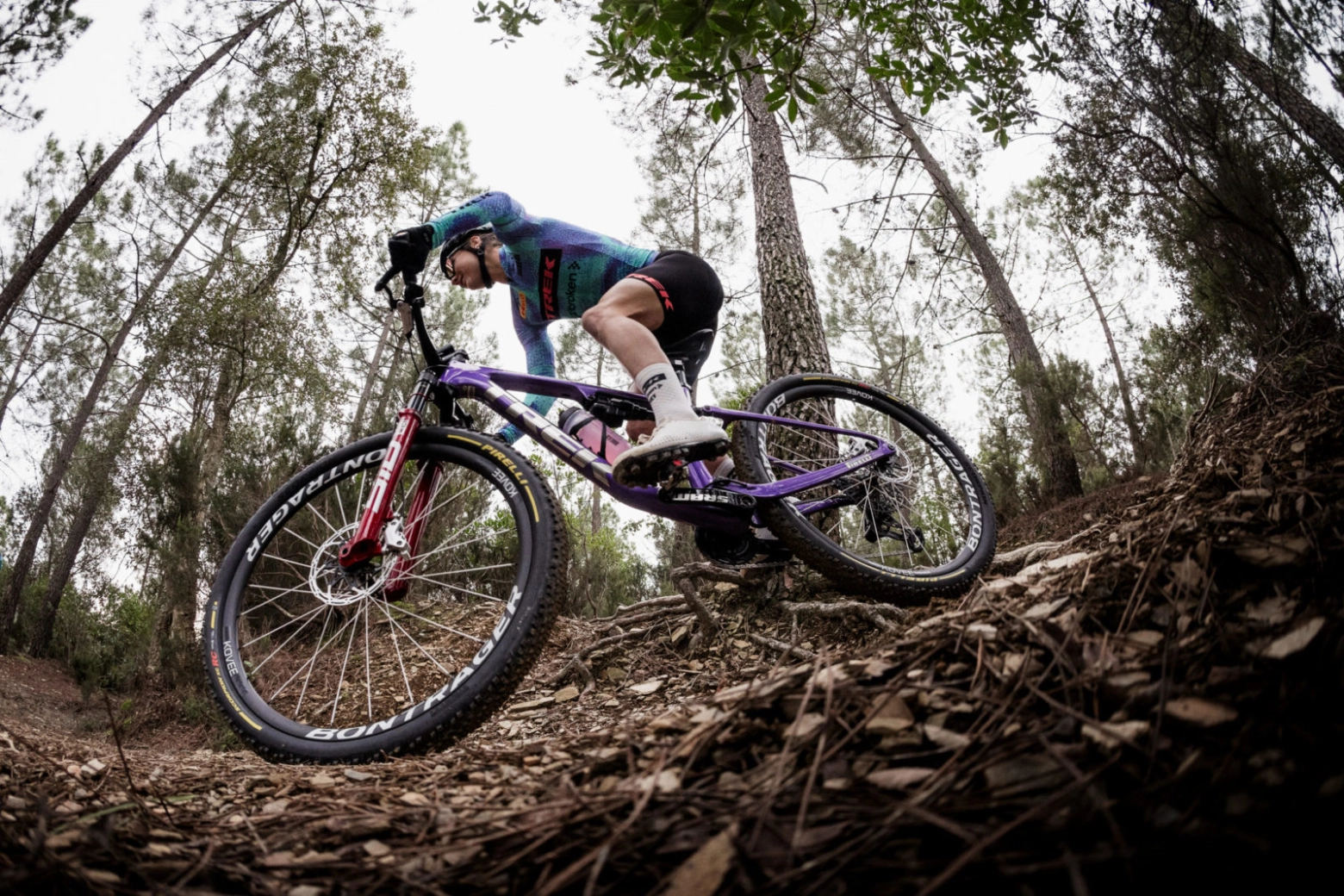
Trek presents its new bike for the XCO World Cup and announces that it may never reach stores
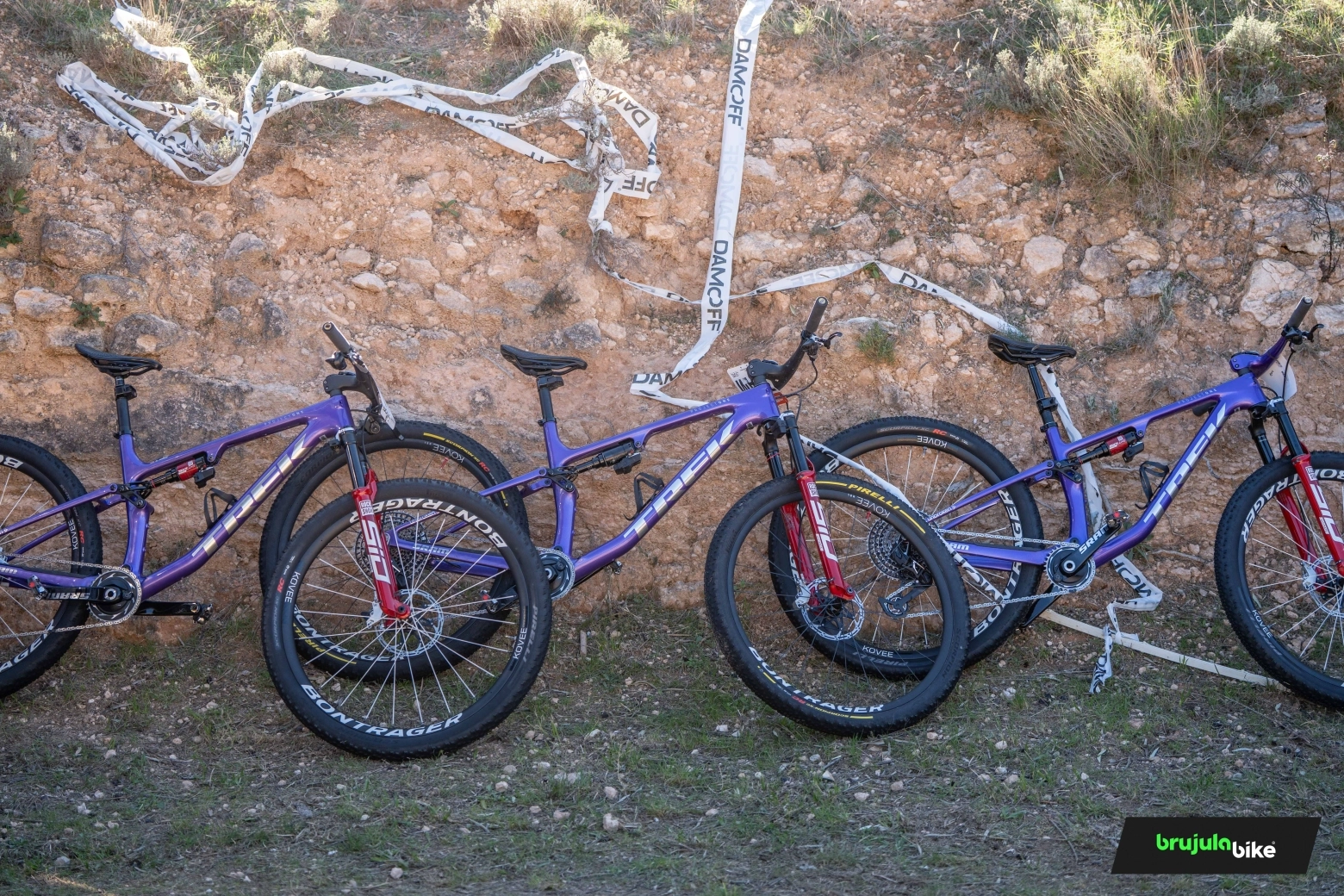
The new bike, easily recognizable by its striking purple decoration and its unique suspension architecture, does not correspond to either a Supercaliber or a Top Fuel. In fact, its development is part of an internal Trek project aimed at exploring new performance solutions that could influence future generations of the brand's bikes.
RECOMENDADO
From steel tubes to carbon without limits: the revolution that forced the UCI to intervene
The most important information about your bike that almost no one checks
Cobblestones, mud, and legend. Why cycling never abandoned the cobblestones
Boost your watts, boost your level: that's how you improve your FTP
Just 13 seconds and everything is still up in the air: watch the 2026 Cape Epic Grand Final live
What are the five monuments of cycling?
Although this experimental model is not intended for commercialization, the company uses it as a testing ground in competition to collect data and accelerate the development of future platforms.
The change in XCO forced a rethink of their bikes
For years, the Trek Supercaliber was the brand's main weapon in Olympic cross-country, a bike that achieved notable successes such as Jolanda Neff's Olympic gold and Evie Richards' world title in 2021.
However, modern XCO has changed radically. Current circuits include larger rock sections, jumps, more technical descents, and much more demanding fast sections.
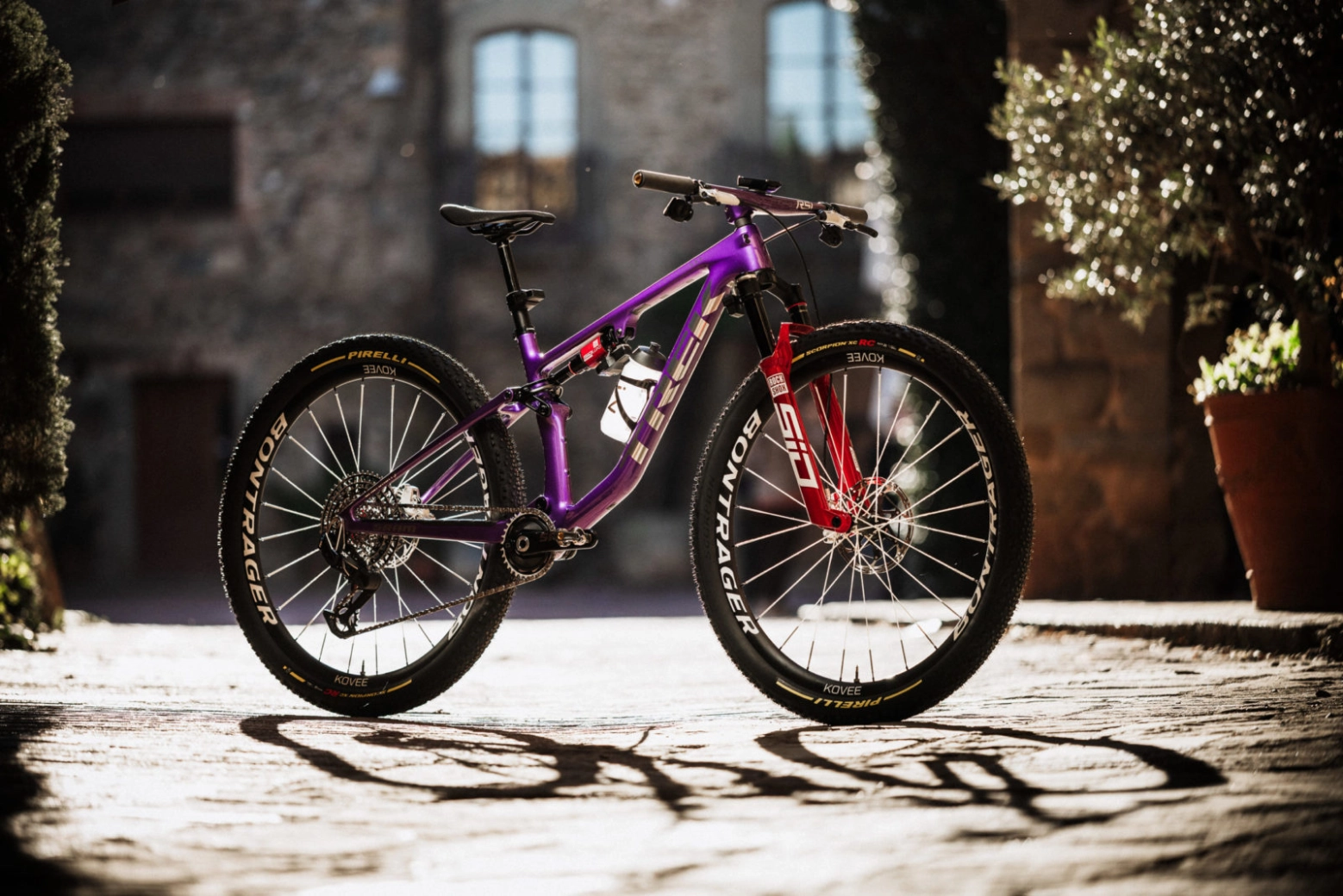
In this context, the 80 mm of travel of the Supercaliber began to fall short for the current level of the discipline. The team even competed last year in several events with the Top Fuel, a "downcountry" focused bike with 120 mm of travel, which proved to be faster in some terrains despite its greater weight.
This scenario led Trek's engineers to start developing a completely new bike specifically designed for modern XCO in 2024.
A project based on data and joint development with the riders
The project was led by engineer Alex Martin, a specialist in XC bikes within Trek. From the beginning, the team decided to adopt the unusual approach of designing the bike based on data and real tests, avoiding relying solely on previous concepts or the heritage of earlier models.
The goal was to create the fastest possible dual-suspension XC bike with 29-inch wheels.
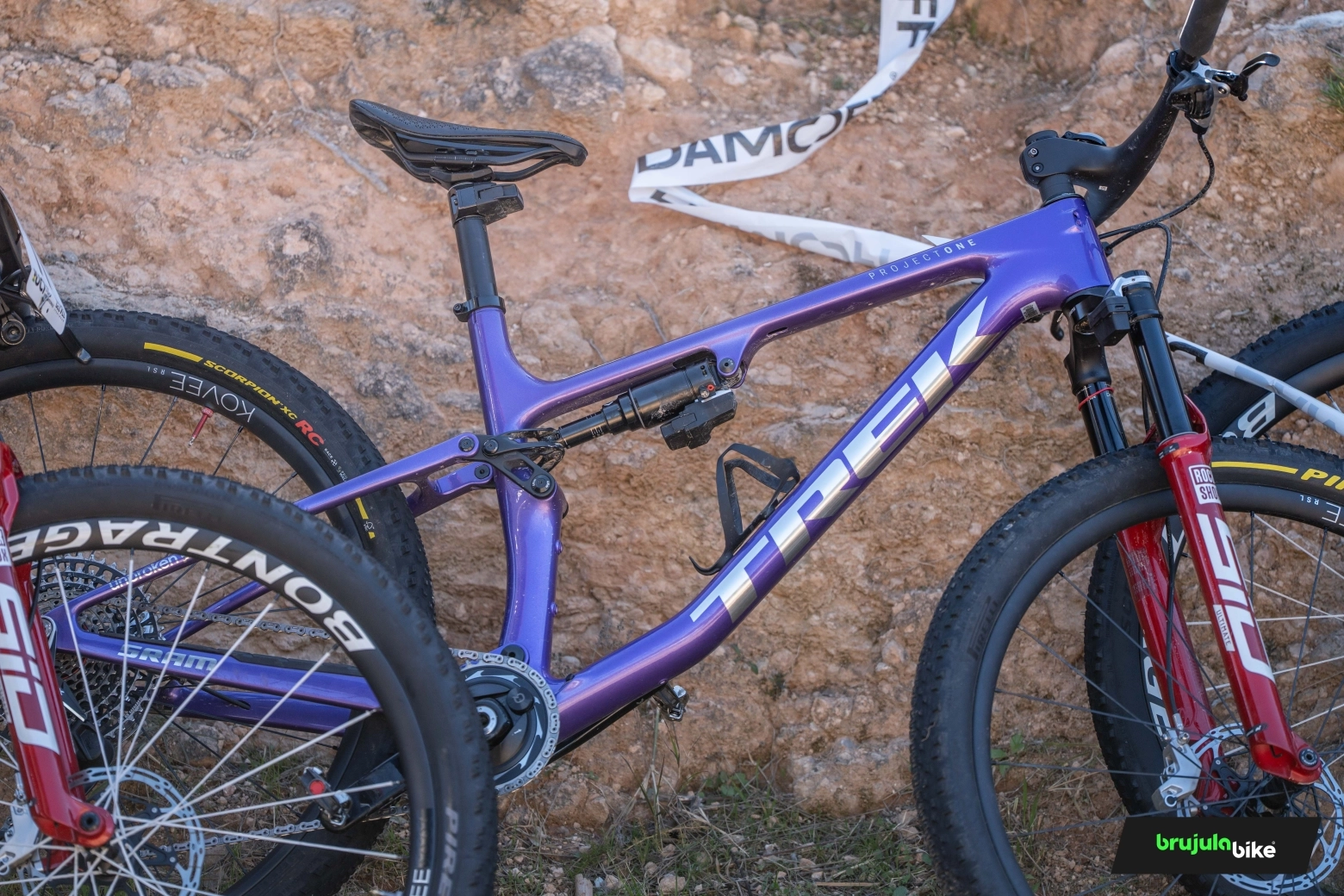
To achieve this, Trek involved riders from the Trek-Unbroken XC team from the start, including Riley Amos, Gwendalyn Gibson, and Evie Richards. These cyclists participated in the testing phases, evaluating different configurations on test circuits in the United States.
Flex stay suspension instead of the ABP system
One of the key points of development was choosing the architecture of the rear suspension. Trek evaluated several solutions before making a decision.
The brand usually employs its ABP (Active Braking Pivot) system in many of its dual-suspension bikes. This system keeps the suspension active during braking, which is especially useful in disciplines like downhill.
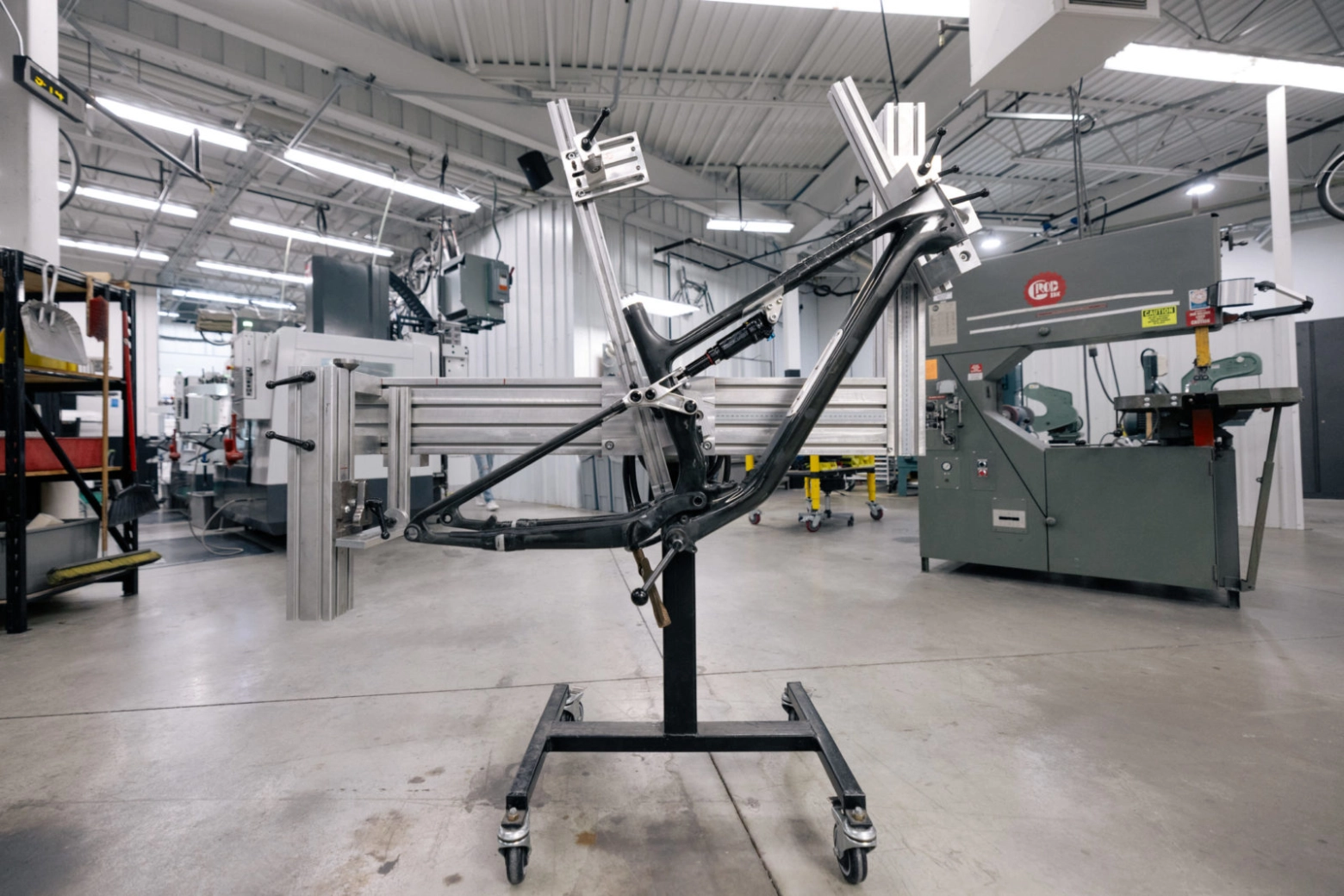
However, for an XC bike where weight and pedaling efficiency are crucial, the team ultimately opted for a design with flexible stays (flex stay).
This system eliminates the traditional rear pivot and allows the rear triangle to flex slightly, taking advantage of the properties of carbon, reducing weight and simplifying the structure.
Comparative tests against production bikes showed that this solution offered a better balance between efficiency, weight, and race performance.
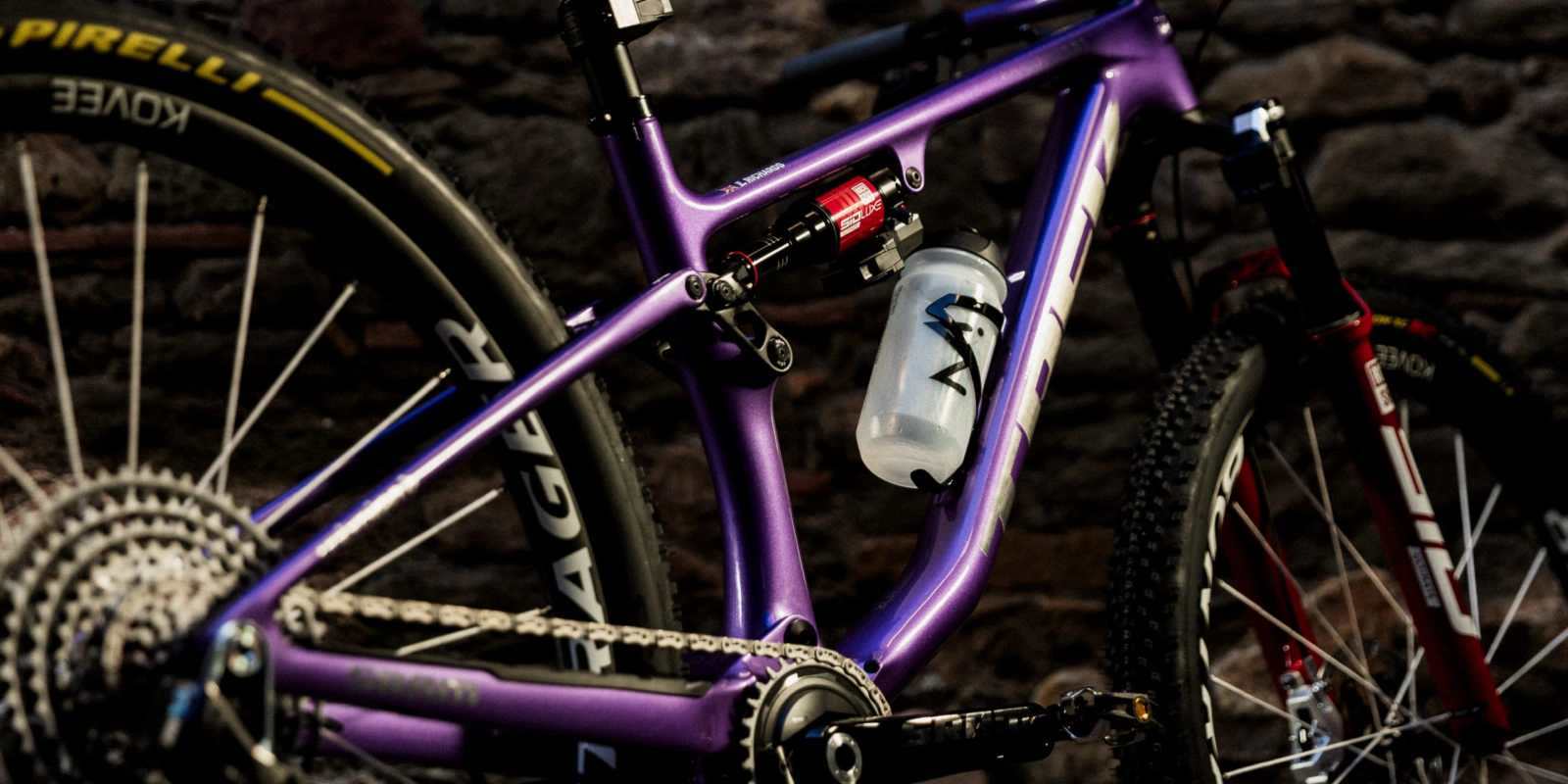
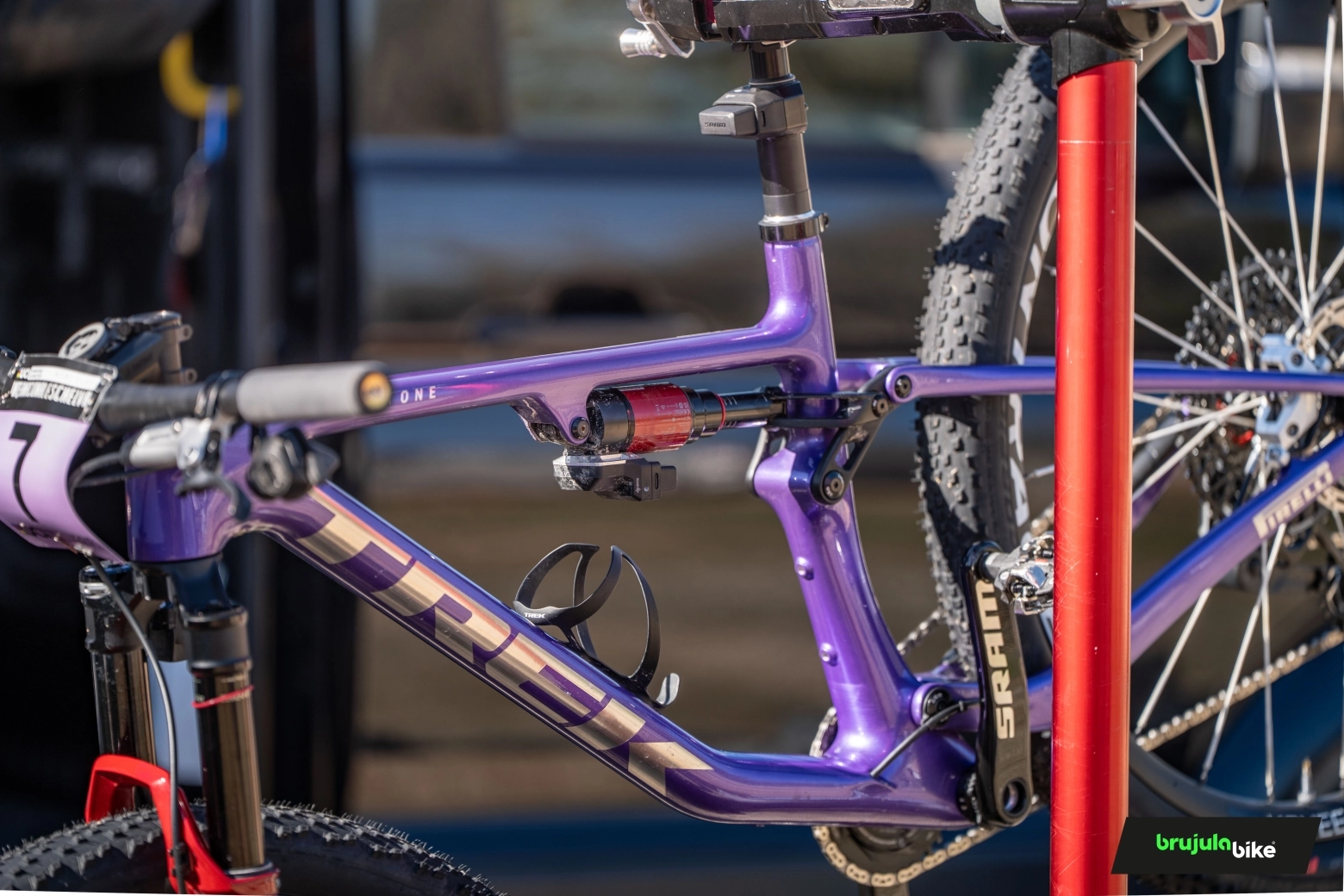
115 mm rear suspension and shock in the top tube
Once the overall architecture was defined, the engineers began to fine-tune the suspension kinematics. To do this, they developed different prototypes with various linkage systems.
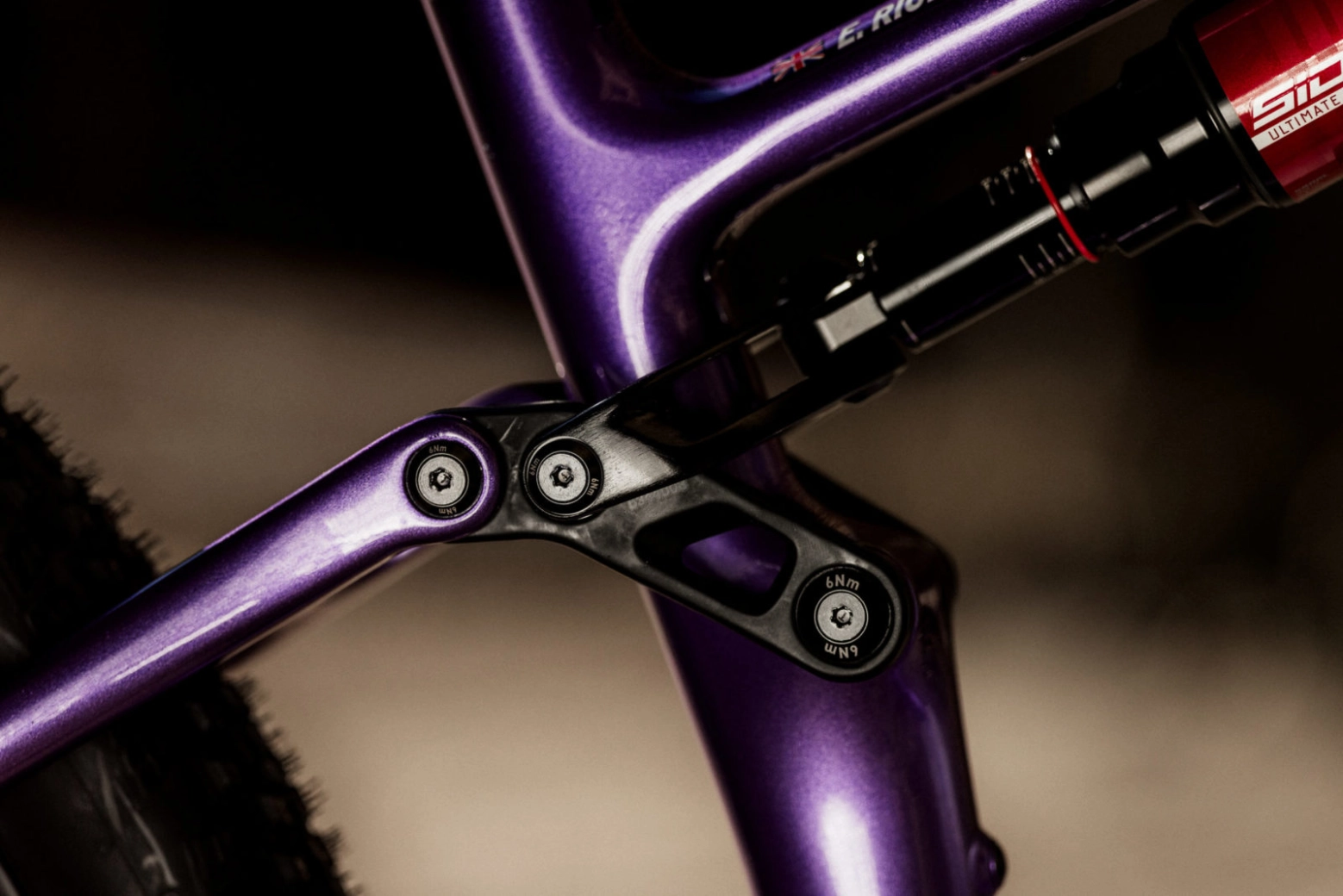
After several tests, the team opted for a design with a traditional linkage that actuates a shock located in the top tube. This system provides very progressive behavior throughout the travel.
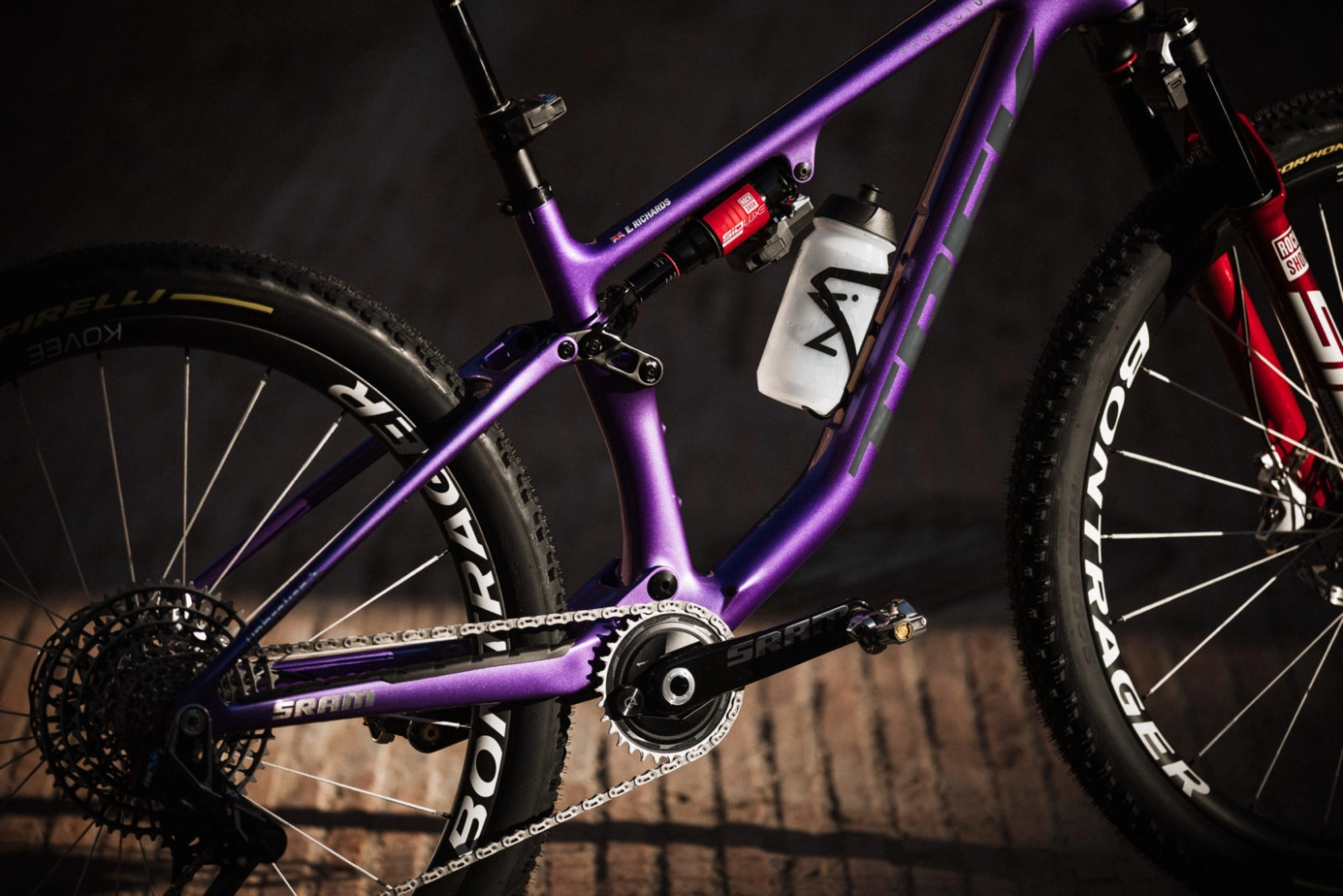
The final chosen travel was 115 mm in the rear wheel, a figure slightly lower than the 120 mm offered by many current XC bikes.
According to Trek's engineers, this figure allowed achieving the optimal balance between:
- pedaling efficiency
- stability in descents
- suspension support
- effective operation of all shock positions
Carbon prototypes from the early phases
Another unusual decision in the development was to build the first prototypes directly in carbon, instead of using aluminum frames as is usually the case in early stages.
The reason is that aluminum introduces significant weight differences that can alter the sensations during testing. For a competitive XC bike, where every gram counts, Trek preferred that the riders tested a product as close as possible to the final result.
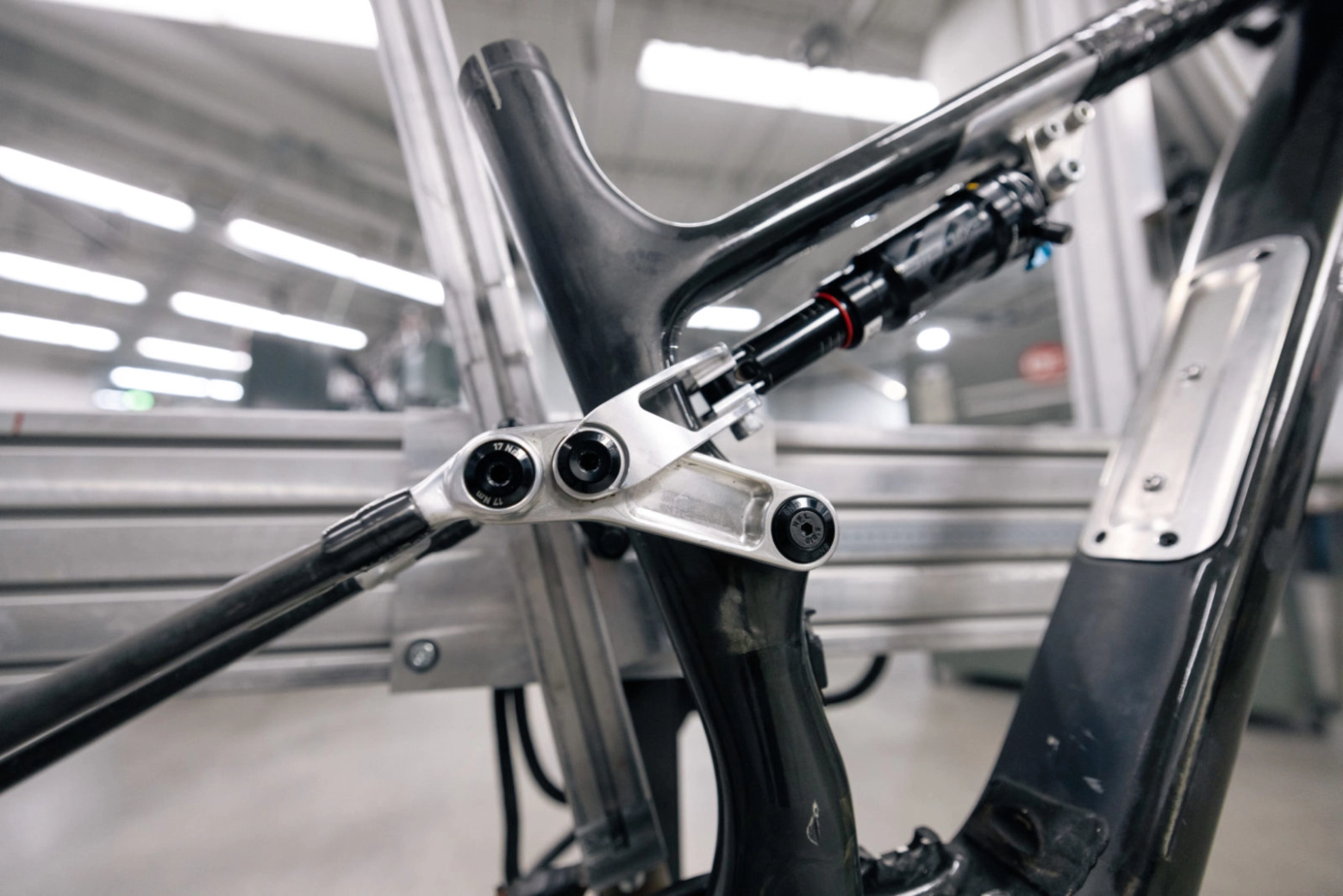
To compare configurations, the engineers even modified existing Top Fuel frames, adapting them to test different linkage systems and analyze behavior in real conditions.
A bike created for the current World Cup circuits
The result of this entire process is a bike that combines elements from different Trek models:
- geometry inspired by the Supercaliber, focused on efficiency
- suspension capability similar to the Top Fuel, better suited for technical terrains
- new suspension system with flex stay and top shock
The frame has been optimized through structural simulations to eliminate unnecessary material and reinforce only the areas subjected to greater stress during pedaling or torsional forces.
A prototype that may never reach the market
Despite its advanced development, Trek has made it clear that this bike will not necessarily reach stores. The prototype is part of a continuous research and development process within the brand.
The main objective is to use it as a testing laboratory in competition. The data collected during the season will allow engineers to apply improvements to future generations of the brand's bikes.
In other words, although this specific model may remain exclusive to the riders of the Trek-Unbroken XC team, many of its solutions will end up influencing the models that will reach the market in the coming years.
También puede interesarte
Road
From steel tubes to carbon without limits: the revolution that forced the UCI to intervene
Road
The most important information about your bike that almost no one checks
Road
Cobblestones, mud, and legend. Why cycling never abandoned the cobblestones
Training
Boost your watts, boost your level: that's how you improve your FTP
Mountain bike
Just 13 seconds and everything is still up in the air: watch the 2026 Cape Epic Grand Final live
Road