This is how the team time trial that opens the Tour works: a mass start, but each leader competes for their own time
The 2026 Tour de France begins this Saturday, July 4, in Barcelona with an unusual and potentially decisive stage from day one: a 19.6-kilometer team time trial that will finish in Montjuïc, next to the Lluís Companys Olympic Stadium. This is a very strange start for a Tour de France, but it promises a spectacular kickoff.

The 2026 Tour Team Time Trial: Rules, Strategy, and Favorites
At first glance, it seems like a classic team time trial: eight riders start together, organize in relays, aim to maintain the highest possible speed, and try not to break the group too early. But the big difference is in the stopwatch. In this stage, not all riders will automatically receive the same time for finishing within a minimum block, as is the case in traditional team time trials. Here, each cyclist will have their own time for the general classification.

RECOMENDADO
When does the Tour de France 2026 start: dates, favorites, route, and how to watch
The Tour de France is cutting its prize money in 2026: here's how the 2.3 million euros will be distributed
Sign up first, train later: why entering a race can change the way you train
Cycling improves how we think, remember and process information: a new study confirms it
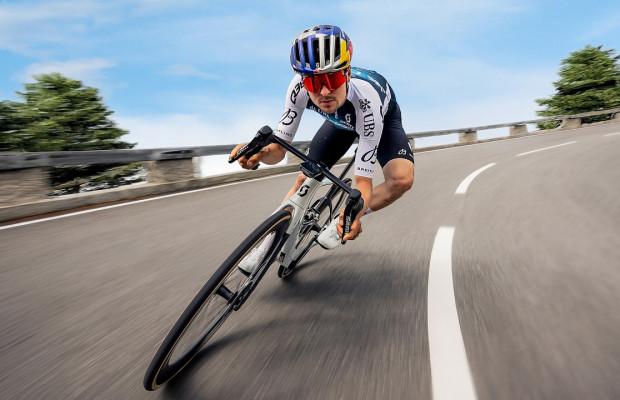
From struggling to enjoying it: tips to build confidence on descents
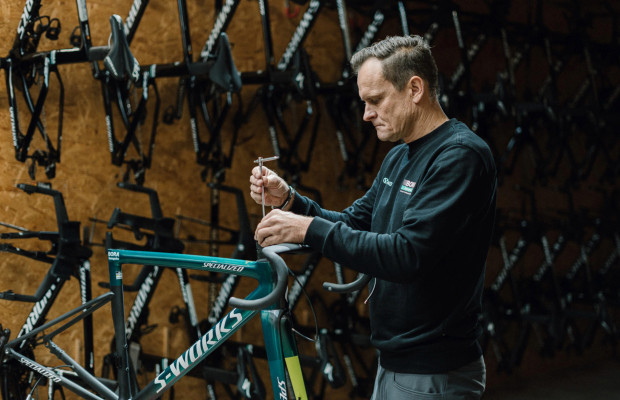
Are you properly positioned on your bike? These are the measurements you should check
The stage classification will be decided by the time of the first rider from each team to finish, while the actual time of each rider will count for the general classification. This completely changes the logic of the event: the team remains fundamental, but in the final part, the leaders can think about themselves.
From Protecting the Leader to Launching Them Towards Montjuïc
In a traditional team time trial, the key was to finish with a minimum number of riders together. Normally, the time was taken from the fourth or fifth rider, depending on the rules of each edition. This forced teams to measure their effort so as not to leave the weaker riders behind too early.
In Barcelona, the approach will be different. For a good part of the route, teams will need to function as a compact machine: clean relays, good communication, constant speed, and the leader always protected from the wind. But in the last kilometers, when the road starts to climb towards Montjuïc, that structure can transform into a kind of final launch.
The goal will be to keep the team leader as fresh as possible until the decisive part. From there, they will no longer have to wait for teammates who are pushing their limits. If they can accelerate in the final climb, their time will determine their position in the general classification.
A Route Designed to Break the Time Trial
The stage will start in the Fòrum area and will cover part of the waterfront and the major avenues of Barcelona before entering a much more demanding area. The route will pass by iconic points in the city such as the Sagrada Família and will finish in Montjuïc, next to the Olympic Stadium.
The first part favors the big engines. Rouleurs, time trial specialists, and teams capable of maintaining a very high speed on flat terrain. But the finish introduces a difficulty that can break any script. Montjuïc includes a 1.1 km climb at 5.1% and then a final uphill stretch of about 800 meters at around 7% to the finish.

This means that it won't be enough to have good time trialists. It will also be necessary to know how to pace. A team that burns out its strong riders too early may find itself without a launch pad at the crucial moment. And a leader who arrives too protected but without the legs to finish strong may lose important seconds to more explosive rivals.
Why It Could Be Decisive from Day One
The stage will not decide the Tour, but it can influence the race from the start. In a time trial of less than 20 kilometers, there shouldn't be huge differences, although gaps of 10, 20, or 30 seconds between favorites can appear. In a race like the Tour, that is already significant.
The novelty of the format increases the risk. Two riders from the same team can start together and finish with different times. A leader can gain seconds on their own teammate if they accelerate in Montjuïc. And a team leader who cannot keep up with their team in the final stretch may start the Tour already on the defensive.

That is why this time trial will also be an initial internal assessment for several teams. In UAE Team Emirates-XRG, Tadej Pogačar and Isaac del Toro will share a team on a day where hierarchy can be seen from the first day. In Red Bull-BORA-hansgrohe, Remco Evenepoel and Florian Lipowitz will have to coexist in a stage ideal for the Belgian champion against the clock. In Lidl-Trek, Juan Ayuso and Mattias Skjelmose will also face a test where every individual second counts.
Visma | Lease a Bike is one of the natural references due to their block, experience, and recent results in team time trials. UAE Team Emirates-XRG has plenty of power with Pogačar, Brandon McNulty, Nils Politt, Florian Vermeersch, or Tim Wellens. Red Bull-BORA-hansgrohe has the obvious weapon of Evenepoel, but will have to decide how much work to demand from him before the finish. Lidl-Trek and Netcompany INEOS also arrive with very strong lineups for this type of effort.
The format aims to prevent a team time trial from crushing the general classification by complete blocks, but to allow the top candidates to gain or lose time based on their own legs. Barcelona will not crown the Tour winner, but it can indicate who has arrived with the most refined team, who has more explosiveness at the finish, and who starts the race needing to recover.
También puede interesarte
Road
When does the Tour de France 2026 start: dates, favorites, route, and how to watch
Road
The Tour de France is cutting its prize money in 2026: here's how the 2.3 million euros will be distributed
Training
Sign up first, train later: why entering a race can change the way you train
Training
Cycling improves how we think, remember and process information: a new study confirms it
Road
From struggling to enjoying it: tips to build confidence on descents
Road
