Stage 12 of the Tour could break the script: wind, steep slopes, and another sprint battle
The twelfth stage of the 2026 Tour de France faces two interests that can hardly coexist. On one hand, the great sprinters arrive in Chalon-sur-Saône before one of the few clear opportunities left to them before the race returns to much more demanding terrain. On the other hand, the route is uncomfortable enough to encourage the strong rollers to challenge the peloton's control.
Tour de France 2026: stage 12 | Last call for the sprinters before the mountains return
The start from the Nevers Magny-Cours Circuit opens a day of 180.9 kilometers that does not feature major climbs, but cannot be considered completely flat either. Three fourth-category climbs, a hilly final section, and the possible tailwind could increase the cost of the chase and turn an apparently simple stage into a much more open race.
Moreover, the sprint comes after the surprising victory of Søren Wærenskjold in Nevers. Tim Merlier was blocked, Jasper Philipsen again finished without a win, and Olav Kooij came in second. The hierarchy of the fast men remains not fully defined, and Chalon-sur-Saône offers a new opportunity to change it.

Timings and keys for stage 12 of the 2026 Tour de France
- Start: 13:30 h (CEST)
- Expected finish: around 17:29 h (CEST)
- Route: Nevers Magny-Cours Circuit - Chalon-sur-Saône
- Distance: 180.9 km
- Total ascent: 1,613 meters
- Type of stage: flat
A breakaway with more arguments than usual
RECOMENDADO
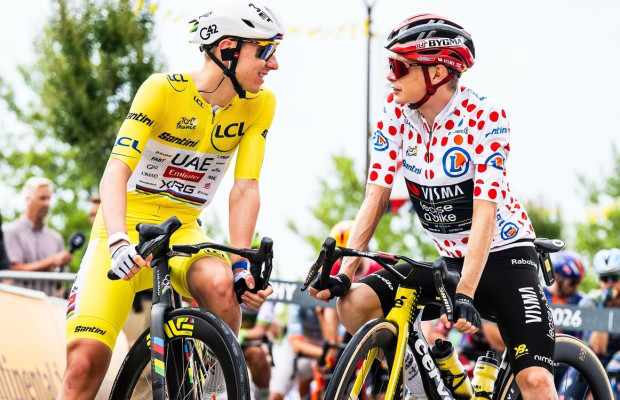
2026 Tour de France: The Meaning of Each Jersey and How to Win It
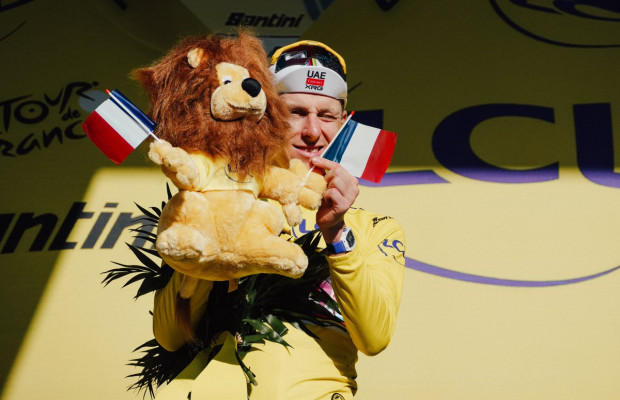
What's the story behind the Tour de France stuffed lion?
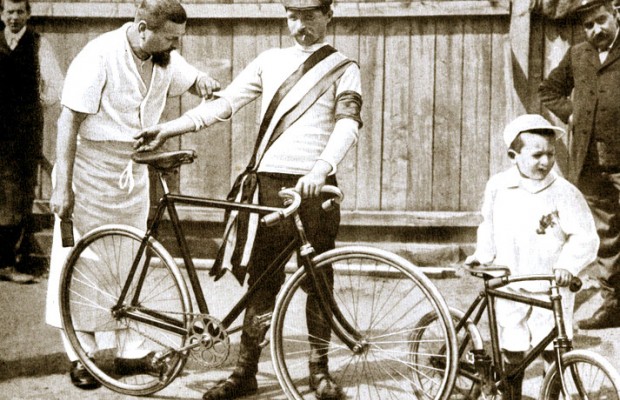
Brand, specifications, and weight of the first bike to win the Tour de France: it was a gravel bike, with no brakes or gears
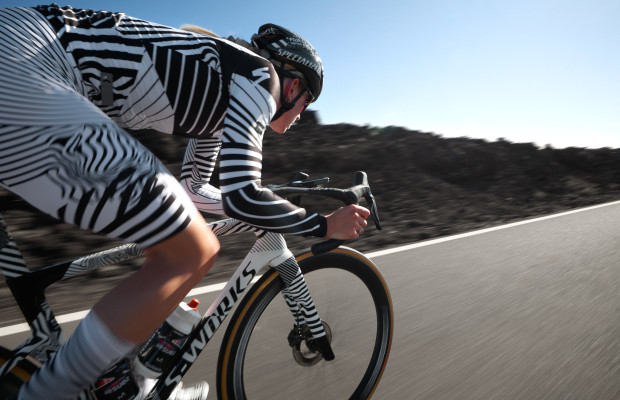
Free aero gains for your bike: small changes that make you faster
More power, less fatigue: how nitrates could help you on the bike
An indoor trainer can do more for your training than you think: here are 7 reasons to own one
The teams of the sprinters have enough reasons to control the day, but they should not let their guard down during the initial battle.
The proximity of new stages favorable for breakaways and climbers will lead many riders to identify this day as a difficult opportunity to repeat. The wind could also enhance the attackers' chances. The forecast points to a southwest component that, over much of the route to the east, could favor the breakaway's advance. On such a long day, a few seconds gained in each section could end up forcing the sprinter teams to expend more riders than desired.
The intermediate sprint will come relatively early, at 133.5 kilometers to go. Mads Pedersen will again be interested in keeping the race controlled up to that point to defend his lead in the points classification, but afterwards Lidl-Trek may completely change their strategy.
Three climbs that don't scare, but do accumulate fatigue
The Côte de Lanty, with 1.9 kilometers at 4%, will be the first categorized ascent. Further on, the Côte de Cuzy, also 1.9 kilometers, will be slightly more demanding with an average gradient of 5.9%.
Neither should eliminate the sprinters by itself, but both will contribute to breaking the rhythm of a stage in which the breakaway will need to take advantage of every difficulty to maintain its lead.
The really important section will begin about 37 kilometers from Chalon-sur-Saône. From there, the road will alternate between climbs, small descents, and false flats until reaching the Côte de Montagny-les-Buxy.
This last climb is 2.7 kilometers at 4% and peaks just 20 kilometers from the finish. On paper, it is too gentle to provoke a natural selection, but it could become a tactical point if Lidl-Trek or another team decides to impose a maximum pace.
The goal would not necessarily have to be to drop the sprinters. Forcing them to climb close to their limit, wearing down their lead-out men, or preventing some teammates from returning to the peloton could be enough to alter the balance of the finish.
The finish leaves room for correction, but not for relaxation
The most delicate point of the finish will be just before the two kilometers to go, where riders will have to navigate a tight turn. It will not be as decisive as the turns in Bergerac because there will still be time to regain positions, but entering too far back will force riders to expend energy in the midst of the launch phase. After that, the road opens up completely.
The last two kilometers will be straight and wide, a scenario that will allow teams to deploy their trains and gradually increase speed.
Jasper Philipsen left some of his best feelings from the Tour in Nevers, although he again finished without a victory after a finish marked by Wærenskjold's attack and the subsequent confusion with his relegation, which was ultimately annulled. A route with some fatigue may favor him, and Alpecin-Premier Tech faces one of its last clear opportunities before Paris. Tim Merlier remains the reference for pure speed, although this time the accumulation of climbs and a possible intense chase may reduce some of his advantage.
Biniam Girmay and Olav Kooij have characteristics particularly suited for this day. Both handle the hilly terrain well and should maintain high speed after the last climb. Kooij already knows what it is to win in this Tour, while Girmay continues to seek a clean finish after several sprints where he has not found the necessary space. Max Kanter should also hold on without difficulties and will again benefit from the work of an XDS Astana that is placing him with great precision.
Mads Pedersen represents the tactical alternative, while Pavel Bittner, Huub Artz, and Rick Pluimers could benefit from a hard race. Søren Wærenskjold arrives bolstered by his victory in stage 11, although it will be necessary to see how he responds after the effort and the fall suffered two days earlier. If the peloton gives too much leeway, Abrahamsen, Asgreen, Ganna, or Cort could turn the day into something very different from the sprint that everyone expects.
También puede interesarte
Road
2026 Tour de France: The Meaning of Each Jersey and How to Win It
Road
What's the story behind the Tour de France stuffed lion?
Road
Brand, specifications, and weight of the first bike to win the Tour de France: it was a gravel bike, with no brakes or gears
Road
Free aero gains for your bike: small changes that make you faster
Nutrition
More power, less fatigue: how nitrates could help you on the bike
Training
