Seixas' new bike hits the market: Van Rysel launches the RCR-R PRO and RCR-R
Van Rysel has just taken another step in its top-level bicycles with the presentation of the RCR-R PRO and RCR-R, two WorldTour bikes that share the same aerodynamic platform, but use different carbon constructions to offer varying levels of weight and performance. The new generation, which we had already seen in competition as a prototype, arrives after two and a half years of development alongside the professional team DECATHLON CMA CGM and with a clear goal: to create a bicycle capable of performing well both on the major mountain passes and in fast stages.
The most notable figures correspond to the RCR-R PRO, whose frame weighs 705 grams and allows complete builds starting from 6.6 kg. The RCR-R uses a different carbon layup, with a frame weighing 883 grams and complete bikes starting from 7.4 kg. Both will be commercially available from January 5, 2027.

A competition bike that combines lightness and aerodynamics
Until a few years ago, the development of competition road bikes was clearly divided between climbing models, where weight was the main priority, and aerodynamic models, designed to reduce wind resistance. The new Van Rysel RCR-R aims to combine both qualities in a single platform.
RECOMENDADO
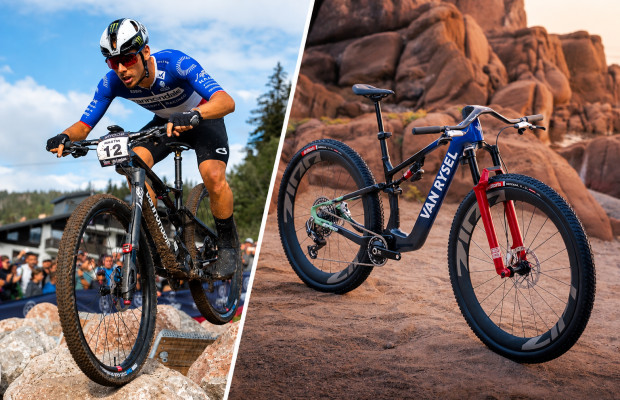
MTB signing of the year: Luca Martin joins Decathlon Ford and will debut the new 32-inch Van Rysel
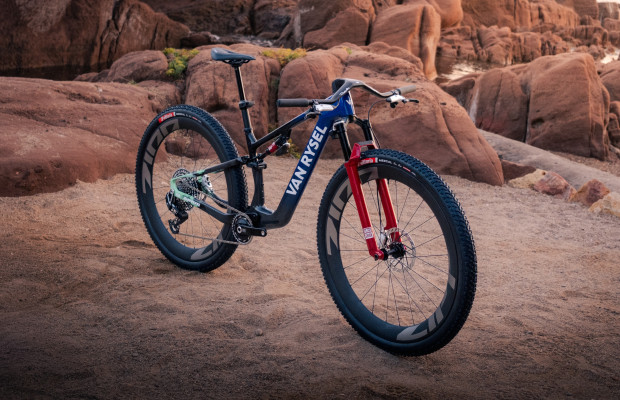
The 32-inch Van Rysel RCR-XC is now a reality: it will be Decathlon Ford’s new bike, with Luca Martin riding it in 2027
Make the most of the bikes in your garage this Black Friday with Bikeflip
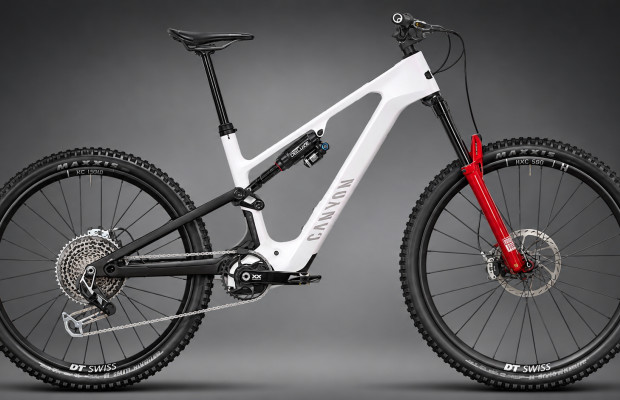
Canyon unveils the Spectral CF LTD: 1,500 W, 20.8 kg and just 150 units available for €7,999

Not a fan of indoor training? These 30-minute workouts can help when there's no other option

“Seixas is better than Poggi was at his age”: Geraint Thomas has no doubts, but points to the Frenchman's biggest challenge

The project has been developed in Lille (France) over two and a half years, with the direct participation of Van Rysel engineers and DECATHLON CMA CGM riders.

During this time, 13 prototypes have been evaluated through CFD simulations, five prototypes in the wind tunnel, and seven different carbon layup configurations. This process has allowed adjustments to both aerodynamic efficiency and the structural behavior of the frame.

One of the aspects the brand has focused on is the balance between stiffness and absorption capacity. The front area is designed to provide high stiffness and harness the cyclist's power, while the rear incorporates controlled flex to improve traction and handling in corners and descents.

The result is a platform that, according to Van Rysel, aims to maintain the immediate response of a competition bike without compromising control when speed increases.

The new RCR-R PRO starts with a frame weighing only 705 grams
The RCR-R PRO is the most advanced version of this new generation and uses a combination of very high modulus and high modulus carbon fibers.
Its frame weighs 705 grams in size M, with a tolerance of 5%, making it the lightest developed so far by Van Rysel. The fork, made from high modulus carbon, adds another 360 grams.

These figures allow the complete bike to weigh as little as 6.6 kg with SRAM Red AXS, a particularly striking weight for a bike that has also been designed with aerodynamics in mind.
For its part, the RCR-R shares the shapes and design of the frame of its bigger sister, but uses a high modulus carbon construction. This raises the frame weight to 883 grams, a difference of 178 grams compared to the PRO version.
The main difference between the two models lies, therefore, in the carbon layup and the components chosen for each build, as they share the same aerodynamic and handling approach.

Up to 6.3 watts of savings with their new aerodynamic bottles
The aerodynamic work has not been limited to the frame shapes. Van Rysel has also developed a proprietary aerodynamic bottle and bottle cage system that helps reduce wind resistance.
According to tests conducted by the brand, this set allows savings of up to 6.3 watts at 45 km/h compared to the previous generation.

The measurement has been conducted under conditions that include leg movement and turbulence, aiming to replicate situations closer to real bike use.
Van Rysel confirms that the new aerodynamic bottles will be sold separately, although it has not yet communicated their price or all their technical features.
Paul Seixas has participated in the development of the new RCR-R
One of the most interesting aspects of the project is the involvement of the DECATHLON CMA CGM team during the various development phases.

The prototypes of the RCR-R PRO have been tested in training camps and races, with cyclists like Paul Seixas, Nicolas Prodhomme, and Matthew Riccitello participating directly in the tests.
"When you go down at more than 100 km/h, confidence in your equipment is essential"
As we previously mentioned, part of this work was done during the team's training camps in Sierra Nevada, where the riders were able to assess the bike's performance in climbs, accelerations, and descents, relaying their impressions to the engineers.
Paul Seixas, who had been competing with the previous generation, explains that the improvements were evident from his first rides with the prototype.
"The bike is lighter, more aerodynamic, and above all, more stable in descents. When you go down at more than 100 km/h, confidence in your equipment is essential."

The French rider also highlights the bike's response during attacks and its ability to maintain speed on fast terrain. Seixas believes that his victory in a Monument with this new generation constitutes a validation of the work done by the brand.
Jérémie Debeuf, head of competition bike products at Van Rysel, places this launch within a broader strategy. The brand aims to develop equipment capable of winning the Tour de France and, to achieve this, has tried to transfer some of the aerodynamic knowledge from the RCR-F PRO to a lighter, mountain-oriented platform.
Configurations, weights, and prices of the new Van Rysel RCR-R PRO and RCR-R
The new range will be available with four different electronic groups per model, with options from Shimano and SRAM.
Van Rysel RCR-R PRO
|
Group |
Complete weight (size M) |
|---|---|
|
SRAM Red AXS |
6.6 kg |
|
Shimano Dura-Ace Di2 |
6.9 kg |
|
Shimano Ultegra Di2 |
7.1 kg |
|
SRAM Force AXS |
7.1 kg |
Van Rysel RCR-R
|
Group |
Complete weight (size M) |
|---|---|
|
Shimano Ultegra Di2 |
7.4 kg |
|
SRAM Force AXS |
7.5 kg |
|
Shimano 105 Di2 |
7.8 kg |
|
SRAM Rival AXS |
7.9 kg |
The weights correspond to the official builds announced by Van Rysel. Both models use a 360-gram fork, while the frames weigh 705 and 883 grams respectively, with a tolerance of ±5%.
Prices and availability of the new Van Rysel RCR-R
The new RCR-R PRO and RCR-R were officially presented today, November 12, during Rouleur Live in London, but their commercialization will begin on January 5, 2027.

Van Rysel has confirmed that the range will have prices ranging from 3,299 to 8,499 euros in Europe, although it has not yet detailed how much each build will cost.

Initially, commercialization is planned for Europe, the United Kingdom, China, and North America, with availability depending on each model and market. In the coming weeks, we will learn more about the complete range and the detailed builds.
También puede interesarte
Mountain bike
MTB signing of the year: Luca Martin joins Decathlon Ford and will debut the new 32-inch Van Rysel
Mountain bike
The 32-inch Van Rysel RCR-XC is now a reality: it will be Decathlon Ford’s new bike, with Luca Martin riding it in 2027
Bike Equipment
Make the most of the bikes in your garage this Black Friday with Bikeflip
Mountain bike
Canyon unveils the Spectral CF LTD: 1,500 W, 20.8 kg and just 150 units available for €7,999
Training
Not a fan of indoor training? These 30-minute workouts can help when there's no other option
Road
