Record on the Cipressa, seated attack at 800W and sprint at 1,250W: this is how Pogacar conquered San Remo
Tadej Pogacar's victory in the Milan-San Remo 2026 is not only explained by his attack or tactical reading, but by a collection of data that outlines one of the most impressive performances ever seen in the Classicissima. From his comeback after a fall to a final sprint decided by centimeters, everything in his race was accompanied by extraordinary figures.
Tadej Poga?ar wins the Milan-San Remo 2026 with numbers: records, enormous watts, and a sprint to the limit
Poga?ar completed almost 300 kilometers of the race at an average speed exceeding 45 km/h, on a day that reaffirmed that the modern Milan-San Remo is getting faster despite its enormous mileage and over 2,000 meters of accumulated elevation.
The Slovenian maintained an extremely high sustained pace for more than six and a half hours, with speed peaks approaching 80 km/h in the sections leading up to the Cipressa.
These figures align with an exceptional physical profile, where his estimated functional power threshold is around 415 watts, allowing him to sustain prolonged efforts at intensities that would be unsustainable for most riders.
The Cipressa: fall, comeback, and record
RECOMENDADO

WorldTour technology for summer, this is the new UNITY collection from Gobik
Nairo Quintana announces his retirement
Cullell dominates in Sabiñánigo with Dascalu climbing up to the podium, Teocchi wins in the women's category

The Cape Epic 2026 is decided on the last day: video with the best moments from the grand final
The Lefty Ocho fork is compatible with 32"
Candice Lill and Alessandra Keller dominate the 2026 Cape Epic
One of the key moments of the race came even before the conclusion. Poga?ar was involved in a fall just a few kilometers from the Cipressa, forcing him to regain positions from the back of the peloton right before one of the decisive climbs.
Instead of losing options, he transformed that setback into a decisive offensive. His ascent to the Cipressa was the fastest recorded to date, with a time of around 8 minutes and 48-49 seconds according to various available measurements. It is worth noting that these types of records can vary slightly depending on the exact point where the start and end of the climb are measured, but the reference is clear: no one had climbed faster than him.
This data gains even more value when considering the context. Poga?ar started the climb a few seconds behind after the fall, had to push hard from the base to return to the front, and once there, launched the attack. Meanwhile, riders like Mathieu van der Poel and Tom Pidcock topped out in times close to 8:57, which explains the difference generated in that segment.
Beyond the record, the historical comparison reinforces the magnitude of the effort. For decades, the best references on the Cipressa were above 9 minutes, highlighting the pace change that the race has experienced in recent years.
Over 800W seated to break Van der Poel
The final climb was the stage where Poga?ar tipped the scales. His attack on the Poggio came with enormous power figures, around 800 watts while remaining seated, a detail that reflects the control and physical capacity with which he executed the move.
This change of pace was enough to drop Mathieu van der Poel, one of the top favorites and a reference in this race in recent years. The ascent was completed in around 5 minutes and 43 seconds, an extraordinary time although slightly above the absolute record, which remains in Poga?ar's hands at 5:38.
The context also helps to understand that record. The climb came after the previous effort on the Cipressa, with slightly unfavorable wind on the approach and the chasing group pressing from behind. Even so, the pace returned to historic levels and finished selecting the race before the final descent.
14 seconds at 197 beats per minute to make history
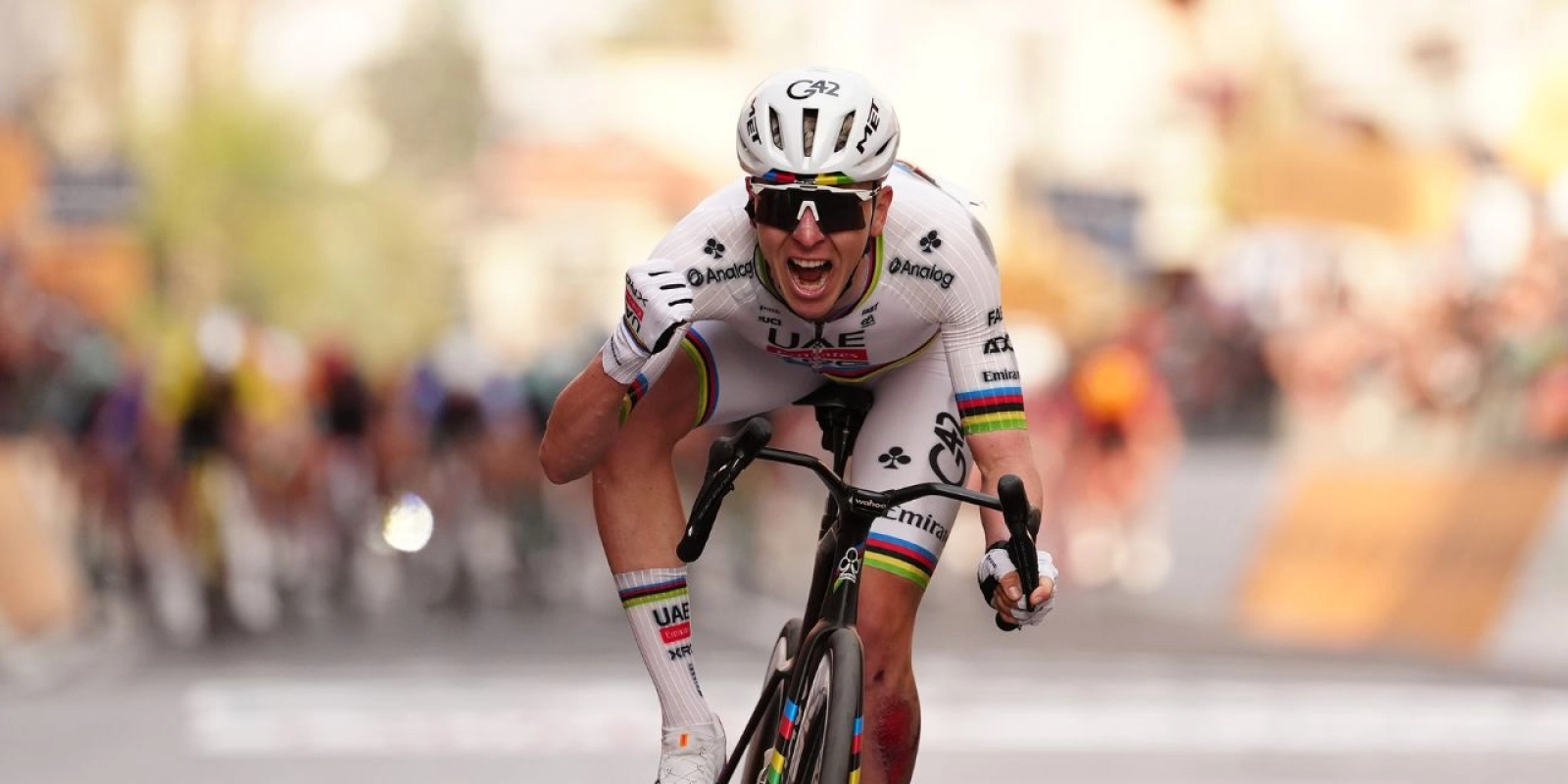
After more than six and a half hours of effort, the Milan-San Remo 2026 was decided in a reduced sprint against Tom Pidcock. The outcome was extremely close, with Poga?ar winning by just half a wheel.
The sprint data reflects a maximum effort: 14 seconds at an average speed of 56.4 km/h, with peaks of 59 km/h. In terms of power, he reached an average of 1,060 watts and a maximum of 1,250 watts at the decisive moment.
View this post on Instagram
Physiologically, the Slovenian pushed his body to the absolute limit, reaching 197 beats per minute at the finish, a record that illustrates the intensity of a completely red-hot finish.
A victory built over the years
This triumph came in his fifth participation in the Milan-San Remo, a race that had so far eluded him despite achieving podium finishes in previous editions.
The progression has been constant, culminating in a victory that grants him his fourth Monument. With this result, Poga?ar is just one step away from completing the full collection of great classics, a challenge so far reserved for only 3 riders in history.
También puede interesarte
Bike Equipment
WorldTour technology for summer, this is the new UNITY collection from Gobik
Road
Nairo Quintana announces his retirement
Mountain bike
Cullell dominates in Sabiñánigo with Dascalu climbing up to the podium, Teocchi wins in the women's category
Mountain bike
The Cape Epic 2026 is decided on the last day: video with the best moments from the grand final
Mountain bike
The Lefty Ocho fork is compatible with 32"
Mountain bike