From MotoGP to cycling, Van Rysel presents its integrated airbag for cyclists
We knew that cyclist airbags were going to be one of the big topics this year, and we have just learned about a new protagonist. Van Rysel has unveiled a competition suit with a fully integrated airbag, a proposal that aims to reduce the impact of falls without altering the cyclist's performance.
Van Rysel presents a suit with an integrated airbag that aims to change safety in professional cycling
According to the information provided by the brand in its official statement, the project arises in a concerning context. The increase in speed in the peloton has been accompanied by a high number of accidents, with around 20 percent of riders suffering fractures each season and more than 1,300 recorded in the last six years.
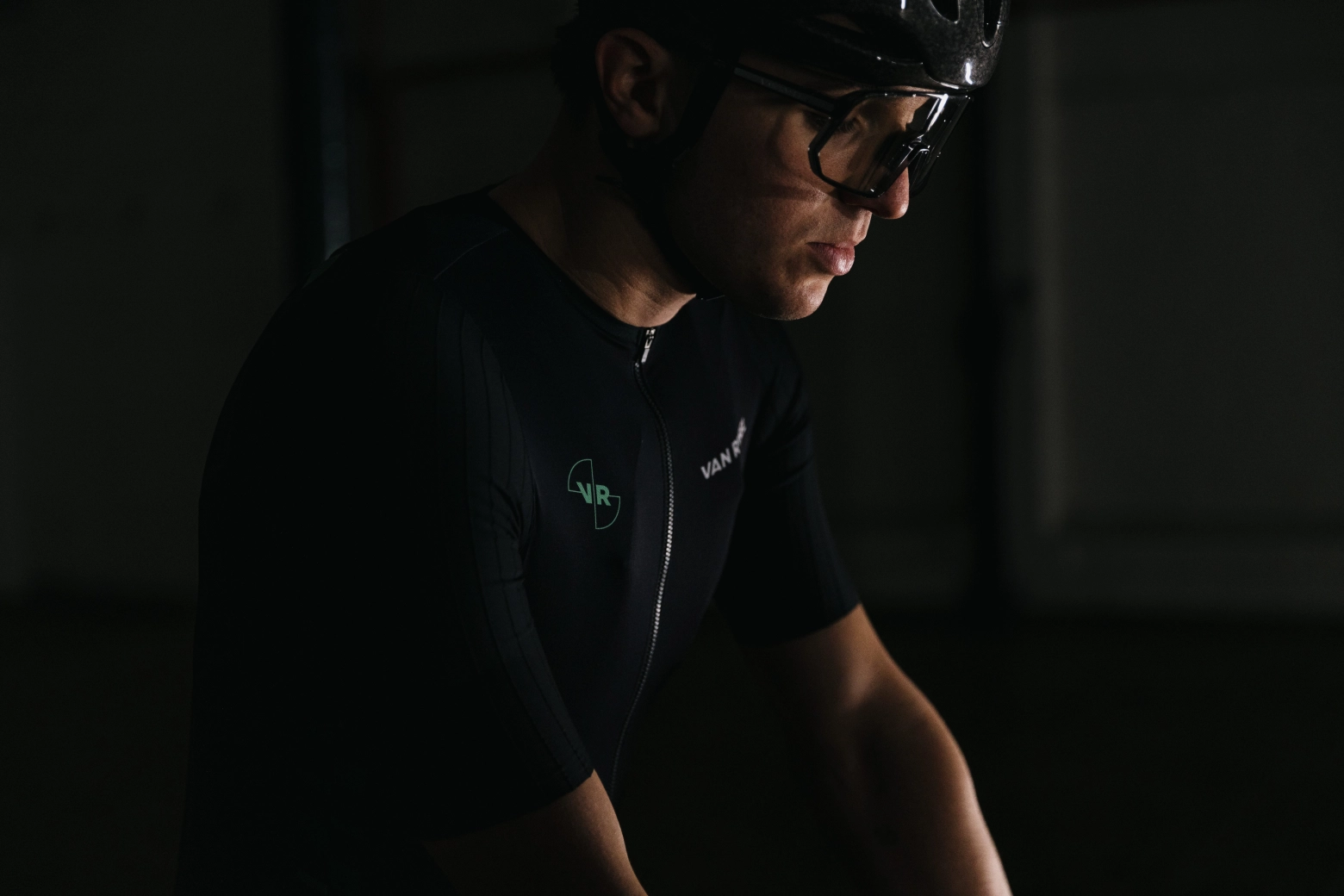
One of the key aspects of the development of this model is that it is not an external system or an additional layer. The airbag is part of the suit itself from its conception, which completely changes the usual approach to this type of technology, which until now was typically seen as an accessory.
RECOMENDADO
Repetition and consistency, that's how Mathieu Van der Poel trains and lives
Van der Poel's bike for Roubaix has been unveiled: here's a look at the new Canyon Endurance CFR
New Megamo Reason 2027 with the powerful Avinox M2S engine: detailed setups and prices
We tested the Megamo Reason 2027: the eMTB that has changed the market evolves and raises the bar
Avinox M2 and M2S, more powerful motors, removable batteries, and total control from the app
Amflow launches the PX and PR starting at €4,500, with up to 150 Nm, removable battery, and full geometry adjustment
The garment is designed to protect critical areas of the body that are out of reach of the helmet, especially the torso, neck area, and back. All of this is done without altering the cyclist's feeling on the bike, which was one of the main challenges of the project.
Jocelyn Bar, product manager at Van Rysel, explains it this way: “Behind every number is a person, and unfortunately, it is still accepted that a rider can lose everything in a fall in a matter of seconds. This is something we no longer want to accept. What helmets meant 20 years ago, we believe this system can mean now, but expanding protection to more parts of the body.”
The system has been developed alongside In&motion, a company with experience in MotoGP and skiing, where airbags are already common. The key has been to adapt that technology to the demands of road cycling.
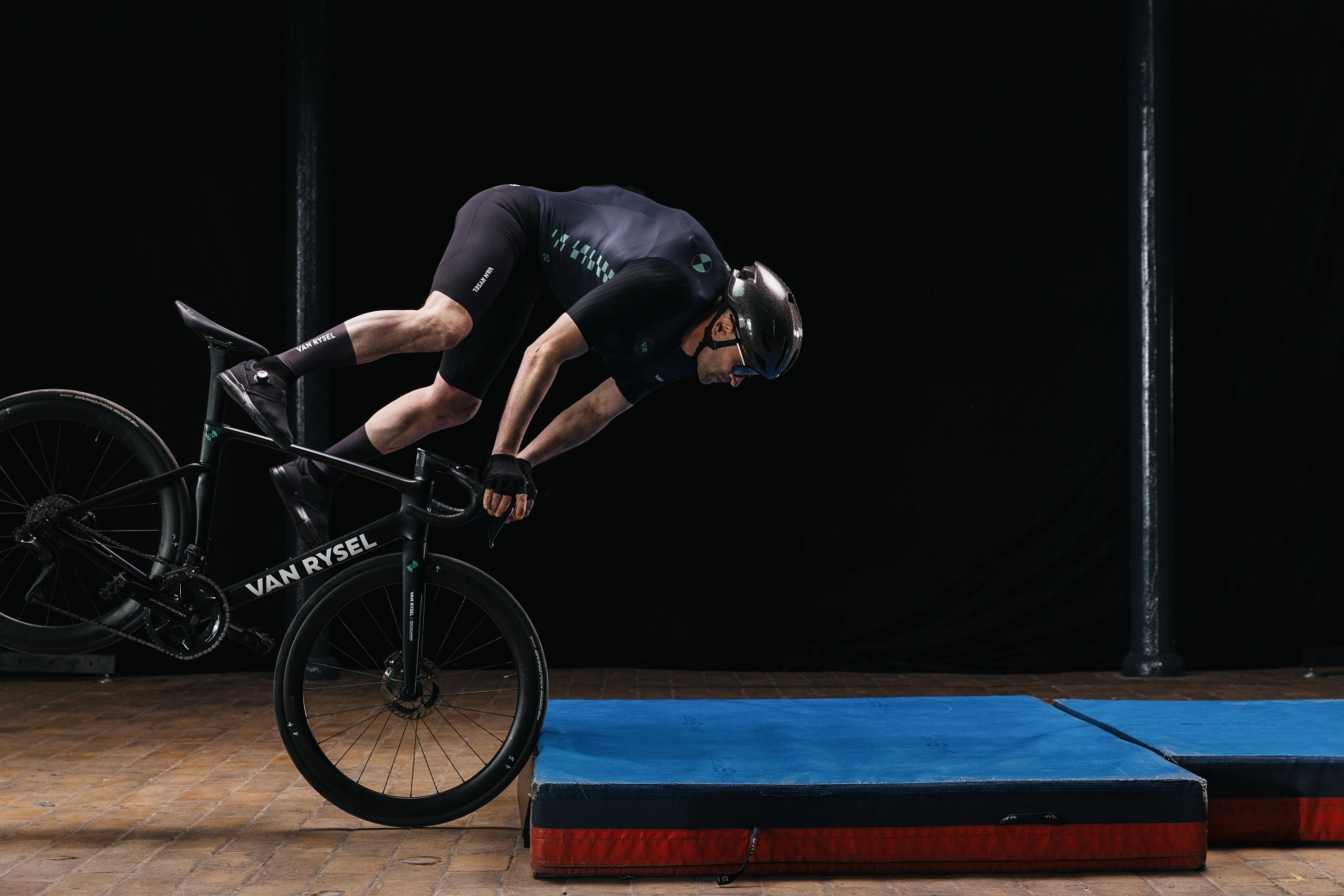
The airbag deploys in just 60 milliseconds and is based on algorithms capable of analyzing the cyclist's movement up to 1,000 times per second. These algorithms have been trained with over 450 million kilometers of real data, allowing them to differentiate between normal racing situations and a real fall.
Rémi Thomas, CEO of In&motion, highlights the value of that data. “The strength of our technology lies in the quantity and quality of the data accumulated over years in high-intensity environments. With this project, we are bringing that intelligence to cycling for the first time, allowing for extremely fast and reliable fall detection.”
One of the most sensitive points was to avoid penalizing performance with the system. The suit, in its full configuration, has a target weight of about 700 grams, of which approximately 500 corresponds to the airbag system. This is a contained figure compared to other sports where the system alone can double that weight.
Additionally, the development has been carried out alongside aerodynamics specialists, with wind tunnel tests and CFD simulations to ensure that the performance is comparable to that of a conventional WorldTour suit. Thermal management has also been worked on to maintain ventilation levels similar to current ones.
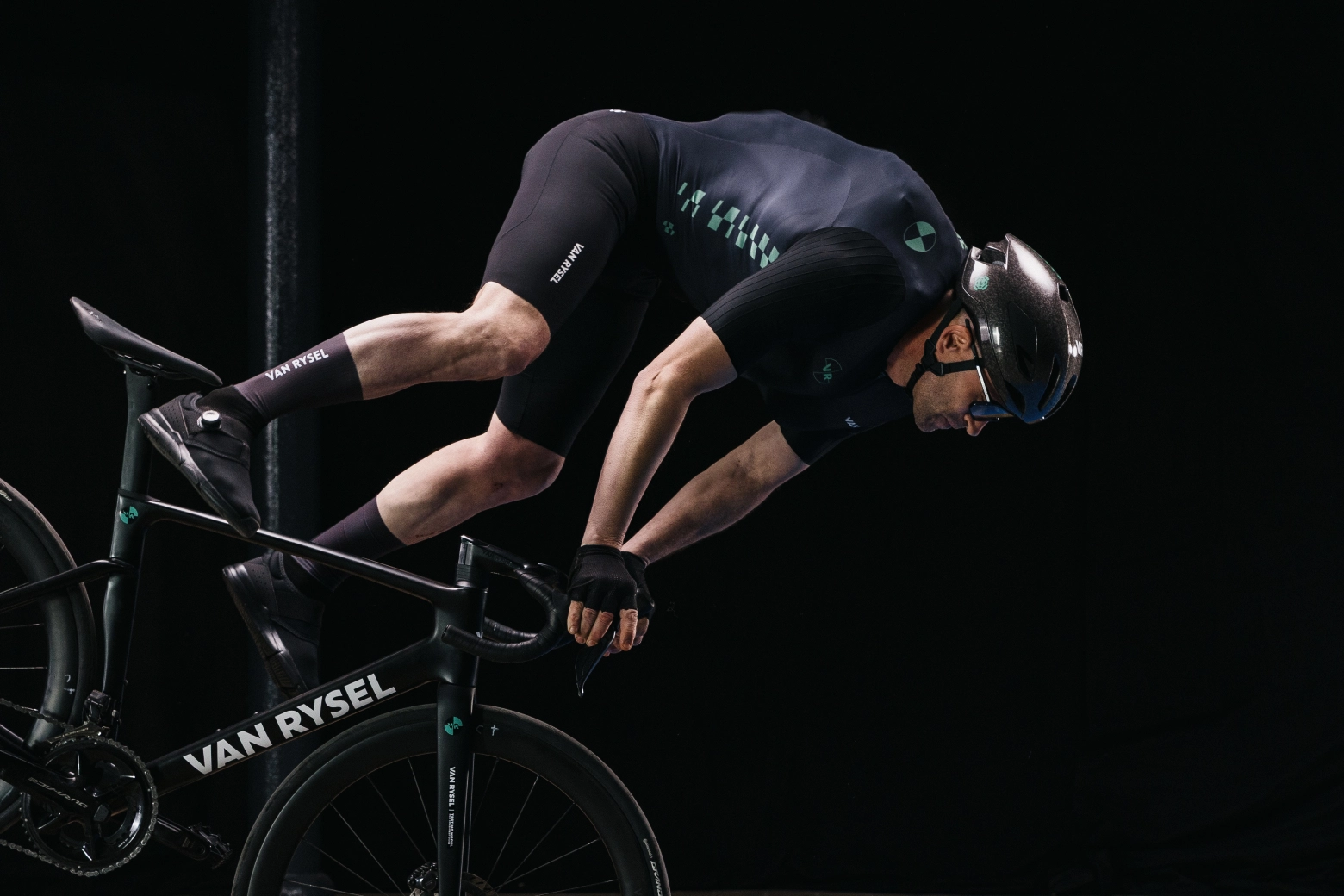
Maxime Dezoomer, an engineer at Decathlon, summarizes the project's approach: “It has always been thought that in cycling, one had to choose between performance and safety. We believe that is no longer the case. The goal was for the cyclist to feel the same with or without the system, and that has guided all decisions.”
The system is already fully functional and is currently in the validation phase with professional cyclists, including riders from the Decathlon CMA CGM team. This will be the final step before a possible introduction in competition.
From the team itself, its general director Dominique Serieys emphasizes the importance of the project: “Professional cycling is getting faster and protecting riders is an absolute necessity. This development is a real technological advance and also provides peace of mind to the cyclist, something that also influences their performance.”
Van Rysel's intention is to go beyond the professional peloton. The brand plans to bring this technology to market in approximately two years, with the goal of making the airbag a safety standard in cycling, just as happened with the helmet.
También puede interesarte
Road
Repetition and consistency, that's how Mathieu Van der Poel trains and lives
Road
Van der Poel's bike for Roubaix has been unveiled: here's a look at the new Canyon Endurance CFR
Mountain bike
New Megamo Reason 2027 with the powerful Avinox M2S engine: detailed setups and prices
Mountain bike
We tested the Megamo Reason 2027: the eMTB that has changed the market evolves and raises the bar
Mountain bike
Avinox M2 and M2S, more powerful motors, removable batteries, and total control from the app
Mountain bike