From a barn in Wisconsin to a global giant in cycling
When Dick Burke and Bevil Hogg met and started talking about bikes, they were making history... they just didn't know it. That conversation was the seed of what, over time, would become Trek, the brand that was born in a barn with Made in USA as its banner, and which is now among the largest manufacturers in the world. Its fascinating story begins in a place in Wisconsin in 1976 and traverses some of the major events that cycling has experienced over the last 50 years. Do you want to know it? Let's go.

The beginnings of Trek: from failure to success
As John Burke, the company's president, recalls today, it all started one day in 1974 when he was 12 years old, and his father told him they were going to buy two bicycles for a trip. They would do it at the store of a certain Bevil Hogg, a South African he had recently met. But those two men shared something more than a passion for two wheels. They also had a common dream. At that time, it was not to build bikes, but to sell them. They wanted to create the first national chain of bike sales in the United States. And they tried. They managed to have two.
RECOMENDADO
The highest-paid cyclists in the world in 2026: Pogacar continues to lead the ranking.
SCOTT Spark RC 2026 Range: updated models, prices, and weights

When do helmets have to be changed? Do they have an expiration date?
What benefits does bicarbonate have for cyclists?
Is a cyclist born or made? The eternal debate between talent and training
Why do you prefer a certain type of training? What does that mean?
But that first business failed shortly after. However, the two friends did not give up; from that failed adventure, they gained a great insight: there were no high-end American manufacturers. All the high-end bikes they sold came from Europe (especially Italy), and they saw no reason why it had to be that way.

So they found a modest space not far from their homes, in the small town of Waterloo, Wisconsin, which at the time had barely 2,000 inhabitants. It was a red barn next to a level crossing, which had previously served as a carpet warehouse. And, by the way, it is still used today to manufacture the molds for Trek's current carbon tubes.
In their first year, 1976, they had only 5 employees and produced exactly 904 frames (made of steel and 'touring' type, sold for about 300 dollars each), to which they added four letters: Trek. Although it was almost called something else: Kestrel, which means 'merlin', the name Hogg preferred. However, Burke prevailed, who heard in that short word of Afrikaans origin (like Hogg himself, by the way) echoes of travel, adventure, and freedom. Not for nothing, 'trek' means excursion or long and arduous walk in English... and the series 'Star Trek', which had aired a few years earlier, had made it fashionable.
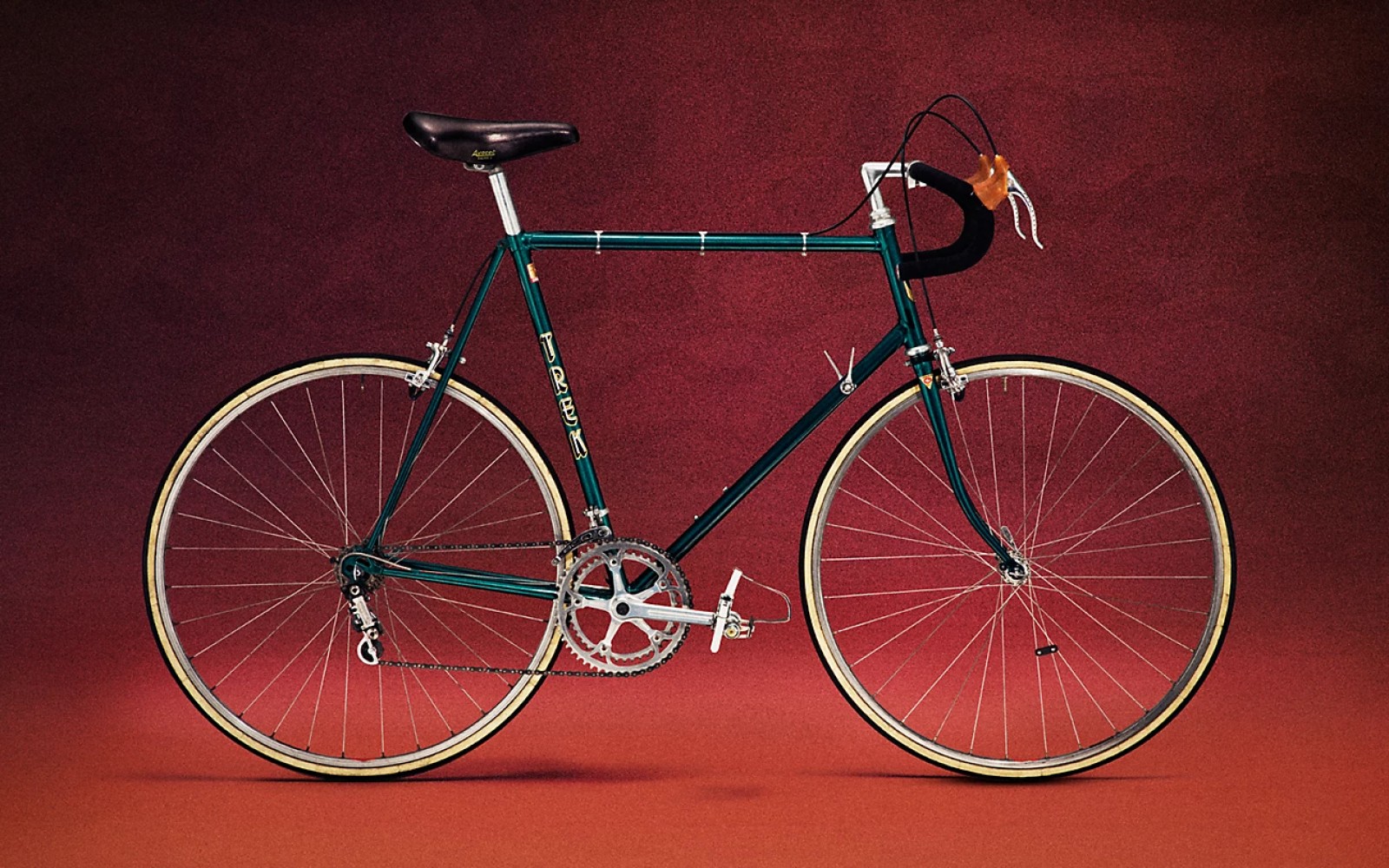
And this time, they had so much success with their high-quality frames that soon the barn became too small for them. By 1979, in fact, they were already generating more than 2 million dollars in revenue and had 12 different models. But, as Trek has never wanted to give up its roots, they moved just a couple of kilometers away to the place where they still have their global headquarters today. With the new plant up and running, in 1980, their first road models, the 750 Pro and 950 Pro, arrived.
They also did not take long to enter the booming mountain bike business, which was already thriving in California, but not so much in Wisconsin. It was in 1983 when Trek's designer at that time, Tim Isaac, sent a prototype he had created to his sales representative on the West Coast to test it. That representative, without hesitation, headed to the legendary Whiskeytown Downhill in Redding and began competing against the biggest names in the sport at the time. To his surprise, the new bike held up well. And thus the 850 was born, which became a true icon well into the 90s, almost always with its 'USA' vinyl.

The pioneering Trek of carbon fiber
Those were years of enormous growth (their sales figures doubled almost every 12 months) and intense innovation, although that very thing almost led them to bankruptcy: in 1985 they launched the first aluminum frame, a metal they still did not handle, which practically paralyzed their factories. "We knew how to make the first unit, but not the second," John Burke, the founder's son, would say years later, as he had to get more involved in the company's operations during those years.
The fact is that they got out of that predicament by betting on quality, but without completely forgetting innovation. At that time, there was a very trendy term, but no one knew exactly where it would lead: carbon fiber. They began to experiment, and in 1986 their model 2500 appeared, which already used components made of this material and was likely among the first in the industry to do so.
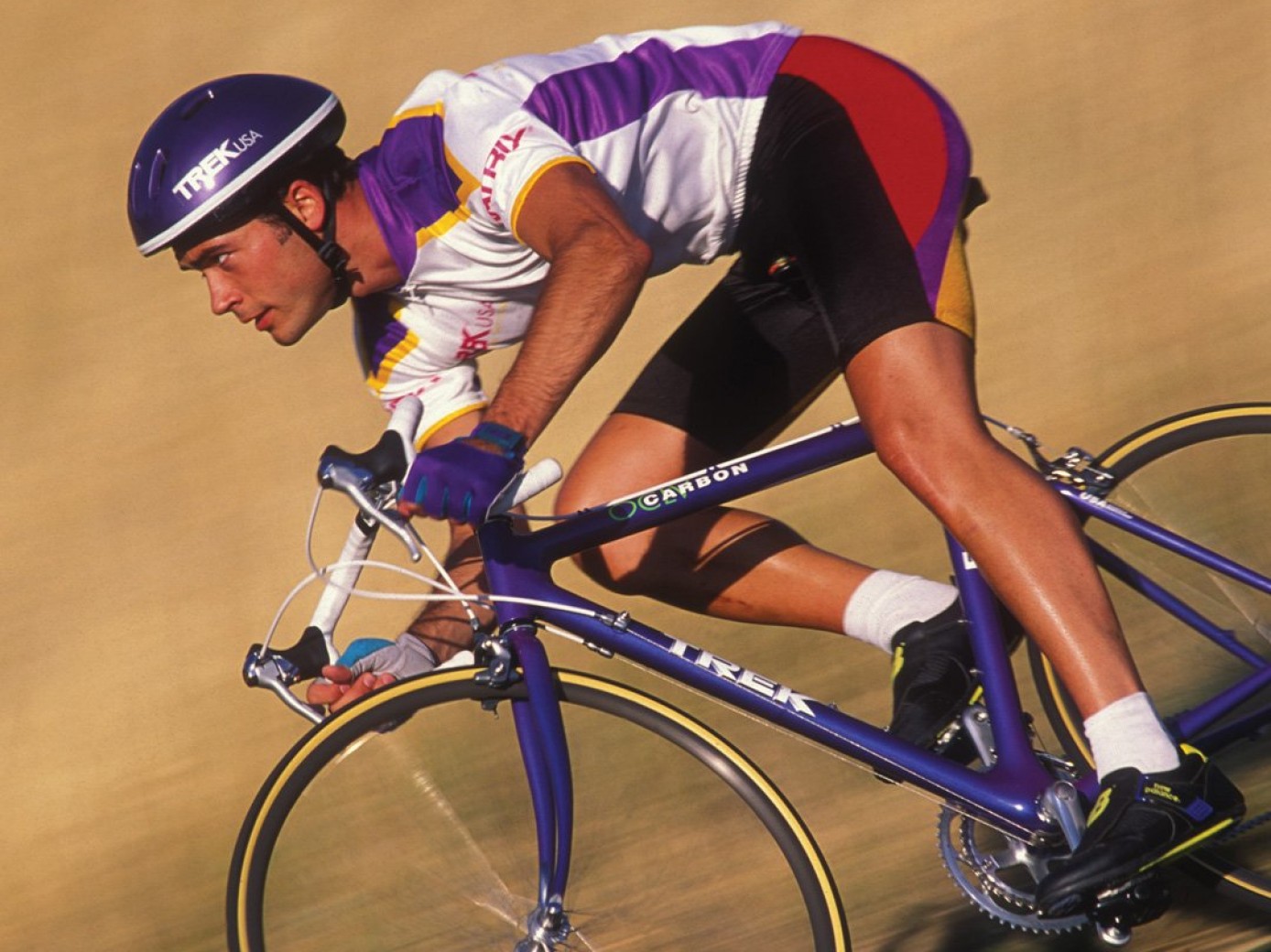
In 1989, they launched their first fully carbon frame, a monocoque called 5000 weighing just 1.5 kg, which, as had happened with aluminum, gave them more headaches than joys. Designed by Trek but manufactured externally, it caused so many problems that, just a year later, it had to be withdrawn from sale.
But it was a decisive step for what would come later. They decided to include carbon fiber in their own production process, leading to one of their great achievements: the OCLV (Optimum Compaction, Low Void). A process developed by them that is even above aviation quality standards. The result of all this was the lightest frame in the world at the time: that of the 5500, which weighed only 1.10 kg. A year later, in 1993, it was the turn of the first OCLV mountain bikes, the 9800 and 9900. Thus began Trek's romance with carbon.

From their own stores to Lance Armstrong
By 1990, 80% of the bikes Trek sold were already mountain bikes. They did this through almost 1,000 third-party stores, but then they returned to their roots: they created their own store in Madison (Wisconsin). It is the seed of what is now a wide chain of company-controlled retail outlets across the United States. Around that time, they also launched their cycling clothing line, Trek Wear, and began to set their sights on Europe, a market in which they were still not a major player.
By 1996, they were the largest manufacturer of bikes sold through specialty stores worldwide, and approximately one-third of their 350 million dollars in revenue came from outside the United States. Additionally, 80% of their sales were mountain bikes. But all that began to change in 1999 when a dominant figure appeared in the Tour de France: Lance Armstrong.

He was not only the first American to win with an American bike (Greg LeMond had done it with Italian and French brands), but he projected the French race into the future, as it was the first bike with a carbon frame (a 5500 OCLV, of course) to achieve this. And the Tour would never again lean towards steel or aluminum.
Certainly, the Armstrong era changed the face of world cycling, and especially of a brand so closely linked to him as Trek, which accompanied him in his 7 Tours. Although today we know he achieved them fraudulently (the brand distanced itself from him in 2012 when the scandal was uncovered), it must be considered that this does not detract from the innovation that their bikes introduced.

The last years: consolidation and charitable projects
Although the last years may have been quieter than the 80s, 90s, and the early 21st century, the truth is that Trek has not stopped seeking new adventures, as its name suggests. Since 2009, it entered the MTB scene with Trek World Racing first and Trek Unbroken now, both in XC and downhill and enduro. It also has two cyclocross teams (TFR CX and Baloise-Trek) and, since 2014, has been the main sponsor of the Lidl-Trek road team, which has included names like Fabian Cancellara, Alberto Contador, more recently, Vincenzo Nibali, and now has Juan Ayuso as the team leader.
In addition, it has been involved in many and diverse charitable projects, such as the National Interscholastic Cycling Association (NICA) in the United States, to promote bike use among children; or World Bicycle Relief, with which it has collaborated since its inception. It also has the Trek Foundation, created to "develop cycling trails and infrastructure for public use," protecting those natural places from urban and industrial development. And finally, it has a commitment against racial inequality called All In, under which it will create 1,000 jobs for Black people in the coming years.
But of course, its focus remains on making fast, reliable, and high-quality bikes for all cycling disciplines. Its Supercaliber, for example, is among the best bikes in the MTB World Cup, while the Madone does not lag behind in the road peloton. They have even created small works of art like the one that allowed Jens Voigt to break the Hour Record in 2014, based on the Speed Concept 9 Series. We are already looking forward to the next move from this company that has gone from a barn to being one of the largest multinational companies in cycling, and from 5 employees to almost 2,000.
También puede interesarte
Road
The highest-paid cyclists in the world in 2026: Pogacar continues to lead the ranking.
Mountain bike
SCOTT Spark RC 2026 Range: updated models, prices, and weights
Bike Equipment
When do helmets have to be changed? Do they have an expiration date?
Nutrition
What benefits does bicarbonate have for cyclists?
Training
Is a cyclist born or made? The eternal debate between talent and training
Training