Cycling aims to put an end to controversial last-minute neutralizations at the Giro, Tour and Vuelta
The Professional Cyclists' Association (CPA) wants to put an end to last-minute decisions that are altering the outcomes of the grand tours. Its president, Adam Hansen, has confirmed a meeting with the UCI and the organizers of the Giro, Tour, and Vuelta to establish clear rules before each race. The controversial neutralization of the final stage of La Vuelta 2026 in Granada has been one of the triggers.
The UCI and cyclists want to prevent grand tours from changing their rules on the last day
The neutralizations of the final stages have become a recurring source of controversy in the grand tours. In recent years, both the Tour de France and La Vuelta a España have modified the way they account for the overall classification times when the race was practically finished. A situation that the Professional Cyclists' Association (CPA) wants to avoid starting in 2027.
Its president, Adam Hansen, confirmed in an interview with Domestique that a meeting will be held on December 2 with the organizers of the three grand tours and the UCI to address this issue.
According to Hansen, the international body also shares the discomfort over these situations: "The UCI is also a bit tired of this, because it doesn't give a good image of the sport."
RECOMENDADO
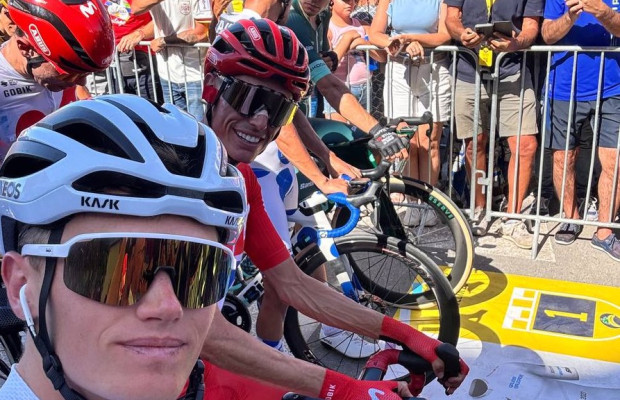
La Vuelta gives in to riders’ requests on the final stage and neutralises the GC 9.8 km from the finish
Schwalbe doubles down on tubeless for cyclocross with its new X-ONE tires
Charlie Aldridge joins UAE: he makes the switch to road racing without giving up XCO
Nike’s return to professional cycling is now a reality
Picnic PostNL’s problems are already taking their toll: the team loses one of its biggest prospects due to its delayed license
Storck once again lays claim to the title of world’s fastest bike by pushing its Aerfast.5 to the limit
The proposal is not to prohibit all neutralizations, but to ensure that the conditions of the final stages are defined before the start of each grand tour. Specifically, it aims to determine in advance at what point the times for the overall classification will be taken and to have it documented in the road book.
This way, the riders would know from the beginning whether the final circuit could alter the classification or if the times would be frozen before entering it, without having to negotiate changes during the last hours of competition.
The controversy in Granada during La Vuelta 2026 has reopened the debate
One of the most recent examples occurred during the final stage of La Vuelta 2026. As we reported then at Brújula Bike, the organization decided to neutralize the overall times 9.8 kilometers from the finish, just before the riders faced the final lap of the Granada circuit.
The measure came after complaints from riders and teams about the characteristics of the route, which included the cobbled climb to the Alhambra and several particularly narrow sections. The decision left Enric Mas as the virtual winner of the race before crossing the finish line, although the stage victory continued to be contested normally.
Now Hansen has provided a more detailed explanation of the reasons that led the CPA to request that modification.
As he explained to Domestique, the main concern of the union was not so much safety as the equality of sporting conditions. The narrowness of the climb to the Alhambra prevented team cars from overtaking the riders to provide mechanical assistance.
Hansen cited as an example a puncture at the top of that climb, which took approximately seven minutes. A rider who suffered that breakdown could be left waiting until the last participants passed before receiving help from their vehicle. In those circumstances, any of the top ten classified riders could lose several minutes and be out of the fight for the overall classification.
The president of the CPA also questioned that the organization presented that neutralization primarily as a safety measure. He argued that if it had been exclusively a safety issue, the riders would have requested measures that protected the entire peloton, not just those aiming for the overall classification.
The Tour de France has also changed its finales in the last two years
La Vuelta has not been an isolated case. The incorporation of the climb to Montmartre into the final circuit of the Tour de France has led to modifications in the timing system in the 2025 and 2026 editions.
In 2025, heavy rains led the jury to neutralize the overall times 50 kilometers from the finish. In 2026, the decision was to account for them before starting the last lap of the Paris circuit.
In both cases, the modifications were agreed upon during the final day, after discussions among the various race officials.
For Hansen, the organizers can design more spectacular and demanding finales, but they must ensure that the riders can compete under fair conditions and that a breakdown without the possibility of assistance does not end up deciding three weeks of competition.
The meeting on December 2 aims to find a common solution for the Giro d'Italia, the Tour de France, and La Vuelta a España for 2027.
The goal is for the final circuits, possible neutralizations, and timing points to be included in the official documentation of each event. This would not prevent extraordinary measures from being taken in unforeseen circumstances, but it would reduce the decisions that are currently negotiated at the last minute.
For now, there is no definitive agreement or new regulations approved. The meeting will be the first step to ensure that the upcoming grand tours reach their final stage with sporting conditions known to all.
También puede interesarte
Road
La Vuelta gives in to riders’ requests on the final stage and neutralises the GC 9.8 km from the finish
Cyclocross
Schwalbe doubles down on tubeless for cyclocross with its new X-ONE tires
Road
Charlie Aldridge joins UAE: he makes the switch to road racing without giving up XCO
Road
Nike’s return to professional cycling is now a reality
Road
Picnic PostNL’s problems are already taking their toll: the team loses one of its biggest prospects due to its delayed license
Road
