Blood Flow Restriction Training: promises, evidence, and doubts of the new trend
Since the 2025 season, Soudal-QuickStep and Tudor have collaborated with the Hytro brand, which markets garments aimed at using the Blood Flow Restriction technique, which seeks to achieve greater benefits with lower training intensities and, in turn, optimize recovery after exertion.
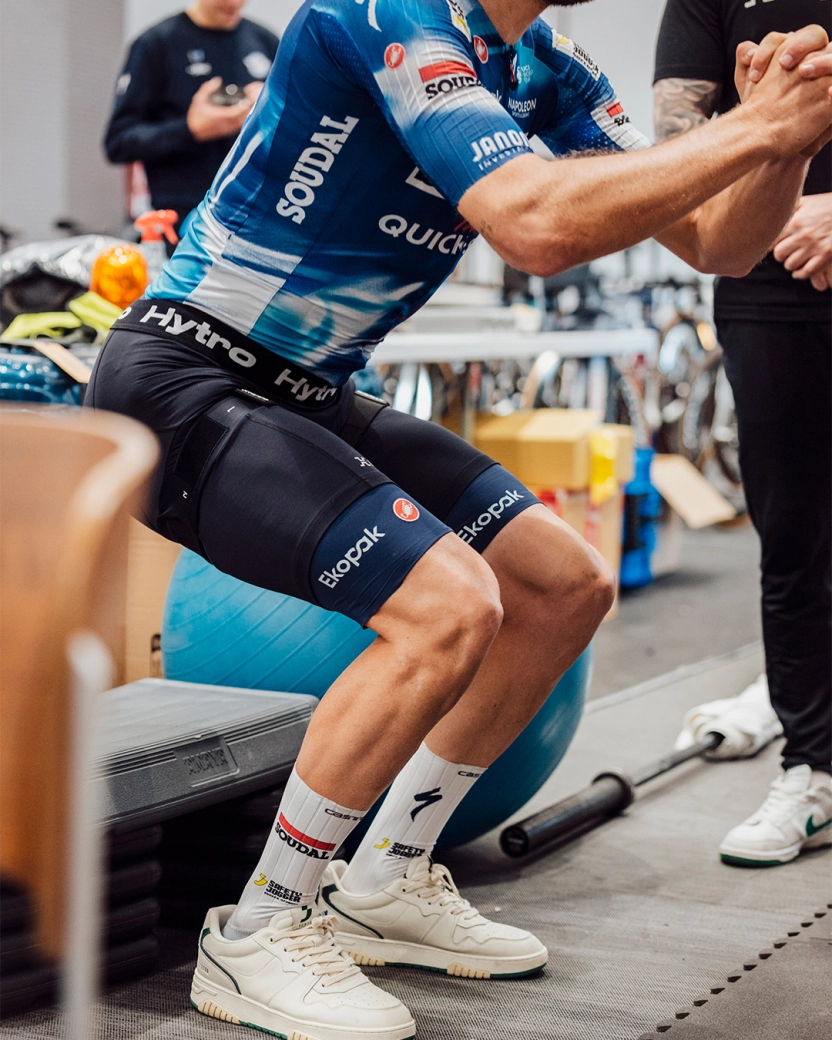
Blood Flow Restriction, the trendy technique to improve cyclist performance
With principles similar to those of compression garments, Hytro has brought the Blood Flow Restriction technique, which has been applied in the medical field for the recovery of various injuries, to sports.
The Blood Flow Restriction technique is simple; it basically consists of using specific garments with straps that can be tightened around the limbs, in the case of cyclists, around the thigh to reduce the blood flow circulating through them, which would favor recovery through mechanisms similar to those of vasoconstriction that occur when we put our legs in cold water or ice or when using pressotherapy garments.
RECOMENDADO
Why does Pogacar always wear lace-up shoes?

Bad odors and chafing? You’re washing your cycling clothes the wrong way

The 2026 MTB World Cup kicks off in a month: dates, venues, and key highlights of the schedule
Fake stickers and illegal bikes: How the UCI monitors equipment during competitions
From steel tubes to carbon without limits: the revolution that forced the UCI to intervene
The most important information about your bike that almost no one checks
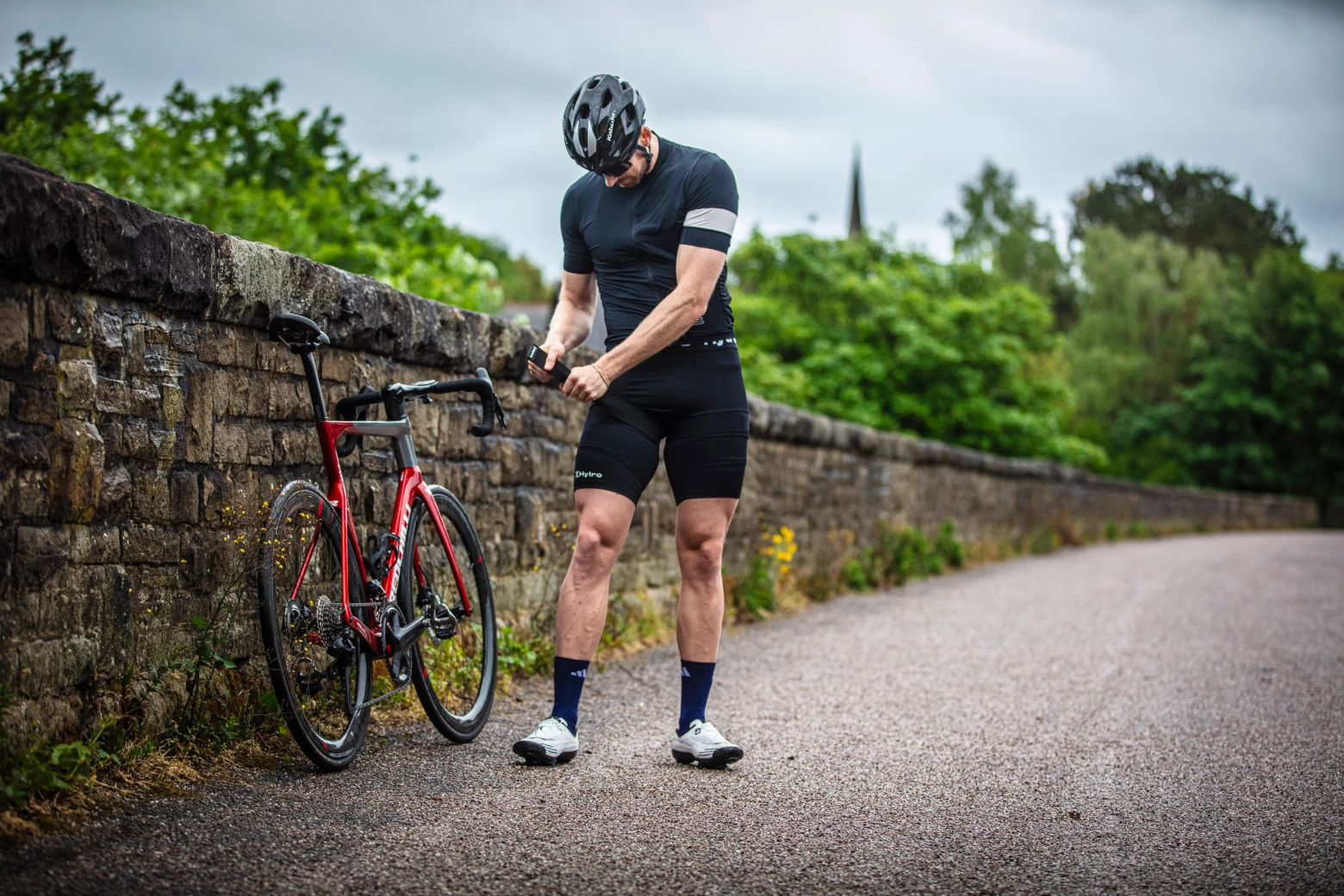
However, the benefits of Blood Flow Restriction could go beyond recovery, and the collaboration of teams like Soudal-QuickStep and Tudor with Hytro, the company that has committed to bringing this technique to the sports world, aims to quantify the improvements that can be achieved by incorporating this method into training sessions.
The idea being worked on is to conduct lower intensity training but with the same impact as if it had been at maximum effort, thanks to Blood Flow Restriction preventing the venous return of waste substances generated by the muscles, such as lactate, and the supply of oxygen, so that, without the fatigue produced by high-intensity exercises, cyclists can achieve the same effects and adaptations at the metabolic level.

Hytro quantifies the improvements provided by Blood Flow Restriction as a 47% reduction in muscle pain, a 38% reduction in joint pain, and a 39% reduction in fatigue. However, although there have been some studies that have tried to scientifically certify the benefits of this method, the results have not been conclusive, although researchers explain that it would be necessary to delve deeper into the protocols for applying Blood Flow Restriction and to have more studies on the subject.
On the other hand, other research points to improvements in VO2max when this technique is used during training in short intervals, such as 30-second sprints, so that the sprint is performed, and at the end, the straps are tightened to apply Blood Flow Restriction during recovery, which would increase the effect of the sprint by not allowing complete recovery.
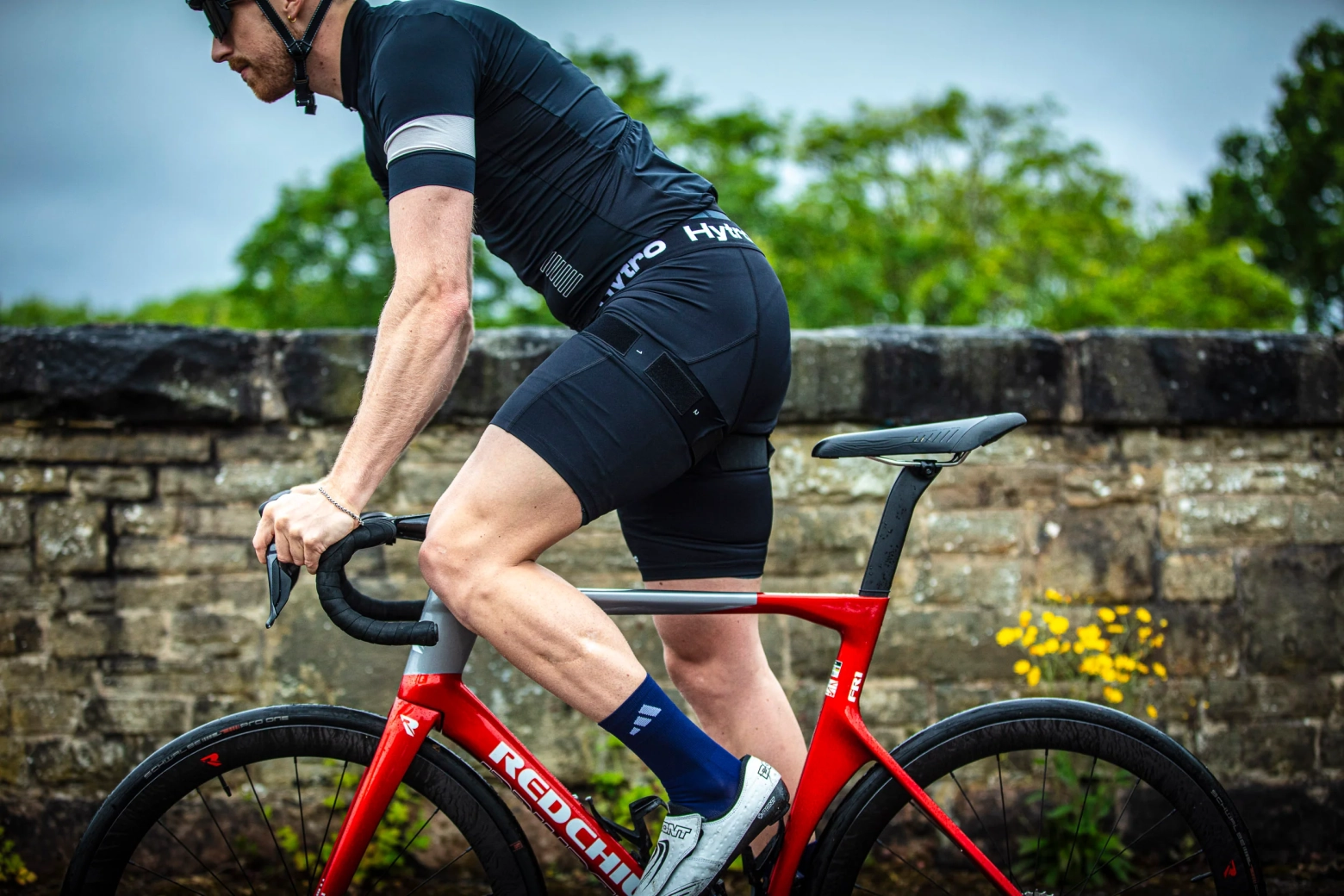
Additionally, Blood Flow Restriction also provides other types of stimuli that would prevent stagnation in professional cyclists who, after years of training in the same way, no longer achieve improvement. In any case, this is a technique whose application in sports is novel, and precisely, the collaboration with professional teams aims to research and develop it so that evident improvements can be achieved.
También puede interesarte
Road
Why does Pogacar always wear lace-up shoes?
Bike Equipment
Bad odors and chafing? You’re washing your cycling clothes the wrong way
Mountain bike
The 2026 MTB World Cup kicks off in a month: dates, venues, and key highlights of the schedule
Road
Fake stickers and illegal bikes: How the UCI monitors equipment during competitions
Road
From steel tubes to carbon without limits: the revolution that forced the UCI to intervene
Road