20 minutes, a dumbbell, and more watts: the workout that every cyclist should do
In cycling, everything starts in the legs, but everything is supported by the core. It may sound like a gym phrase, but there is science behind it: a strong trunk is the foundation that allows the transfer of force from the legs to the pedal without "energy leaks", maintain a stable posture on long rides, and better control the bike on climbs, descents, or curves.
Why cyclists need to work on their core
The core, which includes the abdomen, lower back, glutes, and hips, is much more than aesthetics. It is the structure that connects the upper body with the lower body. If it is weak, the body compensates with other muscles, increasing fatigue and causing discomfort such as lower back pain or strains in the hip flexors.
That’s why the best cyclists in the world train their core with the same seriousness as power sets or VO?max intervals. In this guide, we propose 6 simple, effective, and functional dumbbell exercises, inspired by the training of physical trainer Noam Tamir, but adapted to the logic of cyclists.
A study published in PLoS One (2019) showed that an eight-week core training program improved trunk balance and endurance in athletes, key factors for maintaining efficient posture for hours on the saddle.
RECOMENDADO
What happens if you exceed your maximum heart rate? Risks of pushing yourself to the limit
What are nitrates and why will they give you an extra boost in your performance on the bike?

How to wash your bike at a gas station without ruining it
Tips for staying motivated to go out riding when cold, rain or night lurk
How to choose the right crankset and cassette: a guide to find the right ratio and extend the life of your bike

Complete 2026 UCI WorldTour calendar and key dates: the show begins
Another review in Frontiers in Physiology (2022) went further: a strong core not only stabilizes the spine but also improves motor control and power transfer between arms and legs.
In simple terms, every watt that comes from your legs passes through your trunk first. If that area is weak, part of that energy is lost. And that, in cycling, means less speed and more fatigue.
20 minutes 2 or 3 times a week
Before moving on to the exercises, one recommendation: you don’t need more than 20 minutes, two or three times a week.
Do these movements after a roller workout or on general strength days. You only need a light or medium dumbbell (5–10 kg) and a mat or exercise mat.
Perform the six exercises in a circuit, 8–12 repetitions per movement, and complete 3 or 4 rounds. Rest as needed between each set, but keep the technique impeccable; if you can’t maintain the technique, lower the weight until you achieve good form.
1. Dumbbell Halo
- What it works: trunk stability, postural control, and coordination.
- Why it helps the cyclist: it reinforces core stability in 360°, the same stability you need to keep your torso firm while your legs generate power.
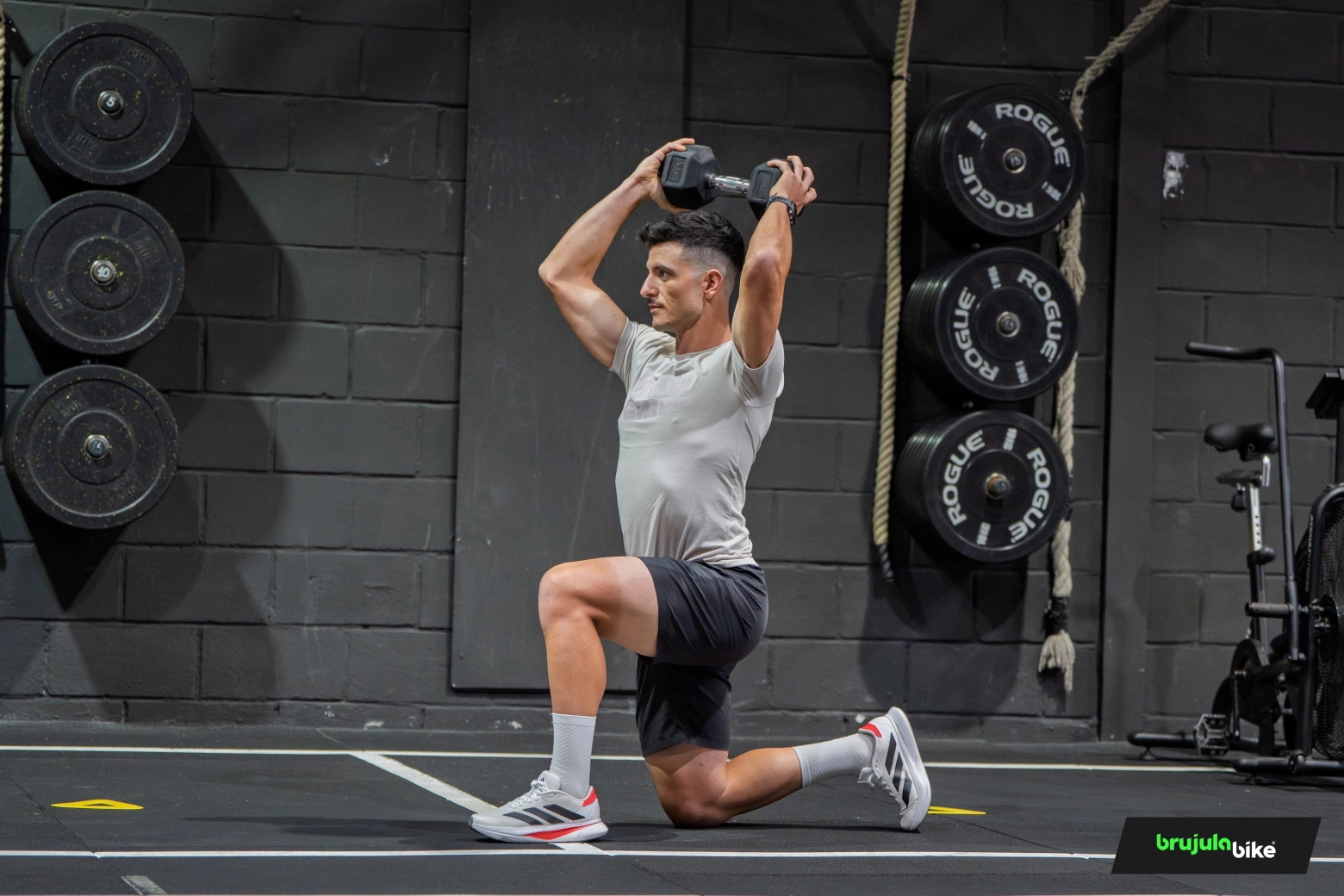
How to do it:
- Get into a lunge position, with your right knee on the ground and your left leg in front, both at 90°.
- Hold a dumbbell by the ends, at chin height.
- Without moving your torso, make a complete circle around your head, keeping your abdomen engaged.
- Perform 8–10 repetitions in each direction and switch legs in the next round.
Imagine your trunk is the frame of a bike: rigid, stable, and aligned. If the handlebars (the dumbbell) move, the frame should not sway.
2. Bicycle
- What it works: obliques, abdominals, and coordination between upper and lower body.
- Why it helps the cyclist: it improves controlled rotation and balance between strength and mobility in the core, key for sprinting or standing climbs without losing alignment.
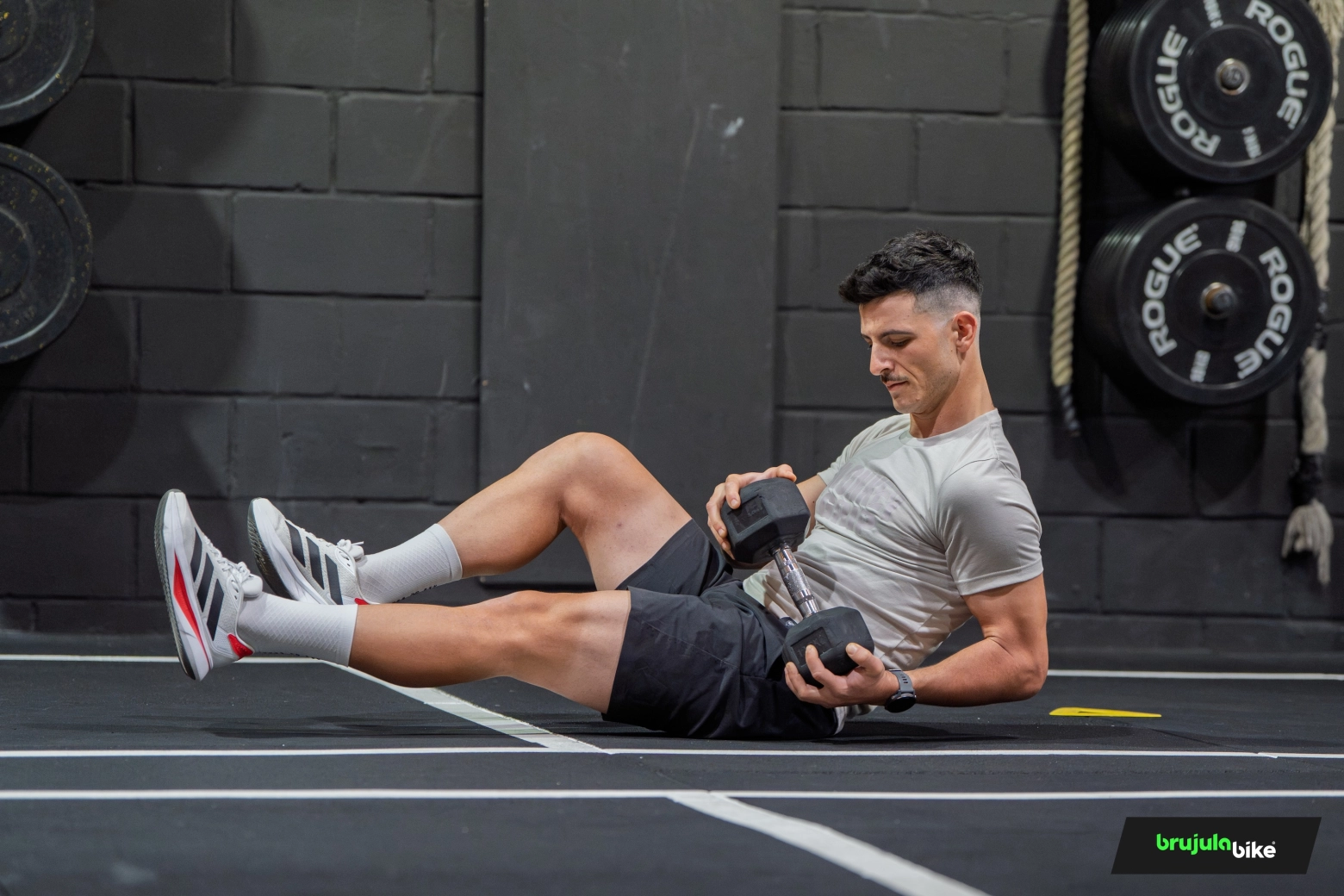
How to do it:
- Sit on the mat with a slight lean back.
- Hold the dumbbell in front of your chest.
- Lift your feet off the ground and, while turning your torso to one side, extend the opposite leg.
- Alternate both sides, as if you were "pedaling" in the air, moving the dumbbell from hip to hip.
- Do 10–12 repetitions per side.
Keep your shoulders down and your neck relaxed. The slower and more controlled you do it, the greater the real activation of the core.
3. One-Arm Skier
- What it works: glutes, hips, deep core.
- Why it helps the cyclist: it enhances the posterior chain (glutes and hamstrings), improves explosiveness in starts, and lumbar stability.
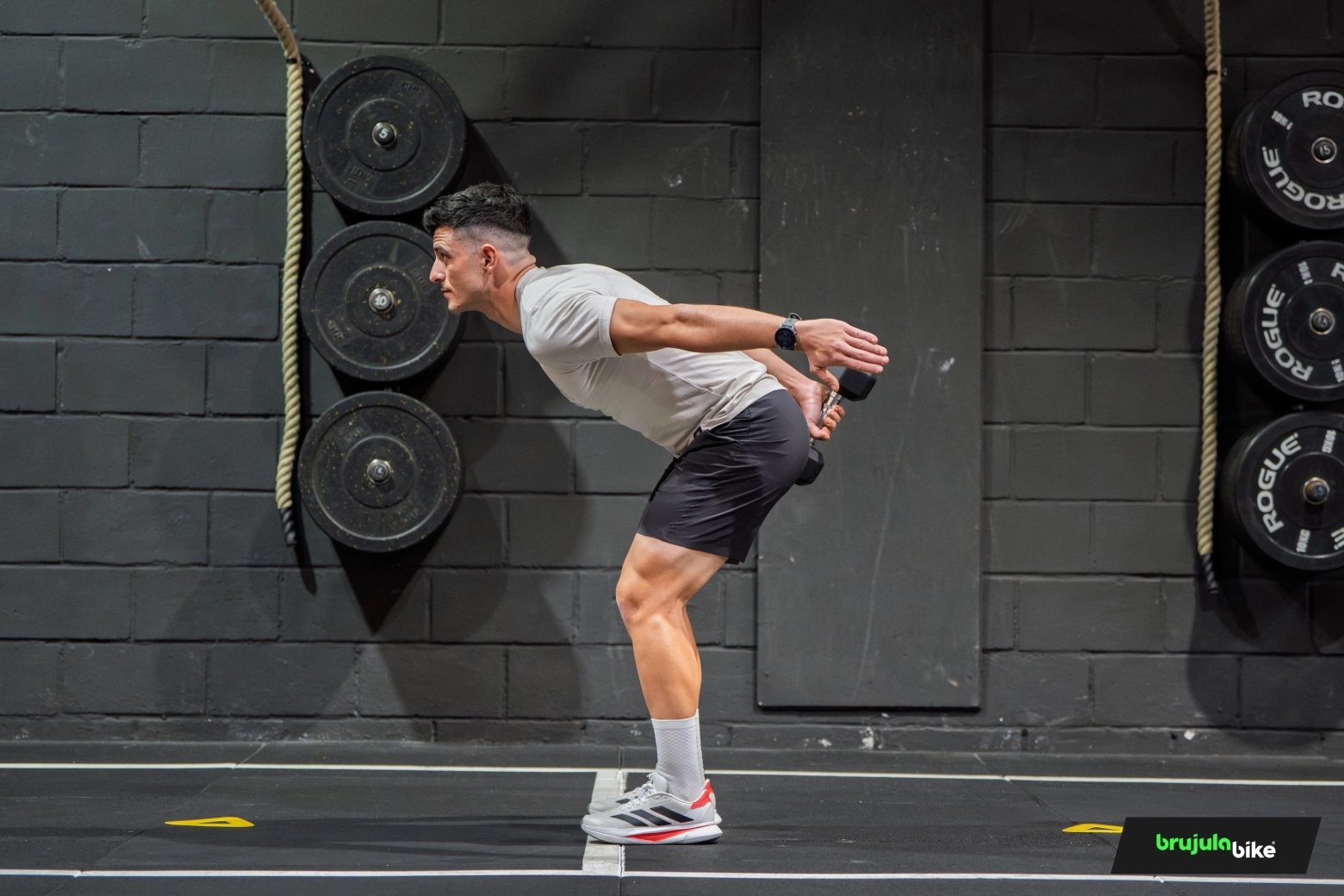
How to do it:
- Stand with your feet hip-width apart, holding a dumbbell in one hand.
- Bend at the hips, bringing the dumbbell slightly back, as if doing a small swing.
- Engage your glutes and push the ground to extend your hips, bringing the dumbbell forward to chest height.
- Control the downward movement and repeat 10–12 times per side.
This is not a shoulder lift, but an explosive hip movement. The force comes from the lower body, not the shoulder.
4. Plank Row
- What it works: deep core, spinal stabilizers, and lats.
- Why it helps the cyclist: it teaches the body to resist rotation, improves posture, and strengthens the back to maintain an aero position without fatigue.
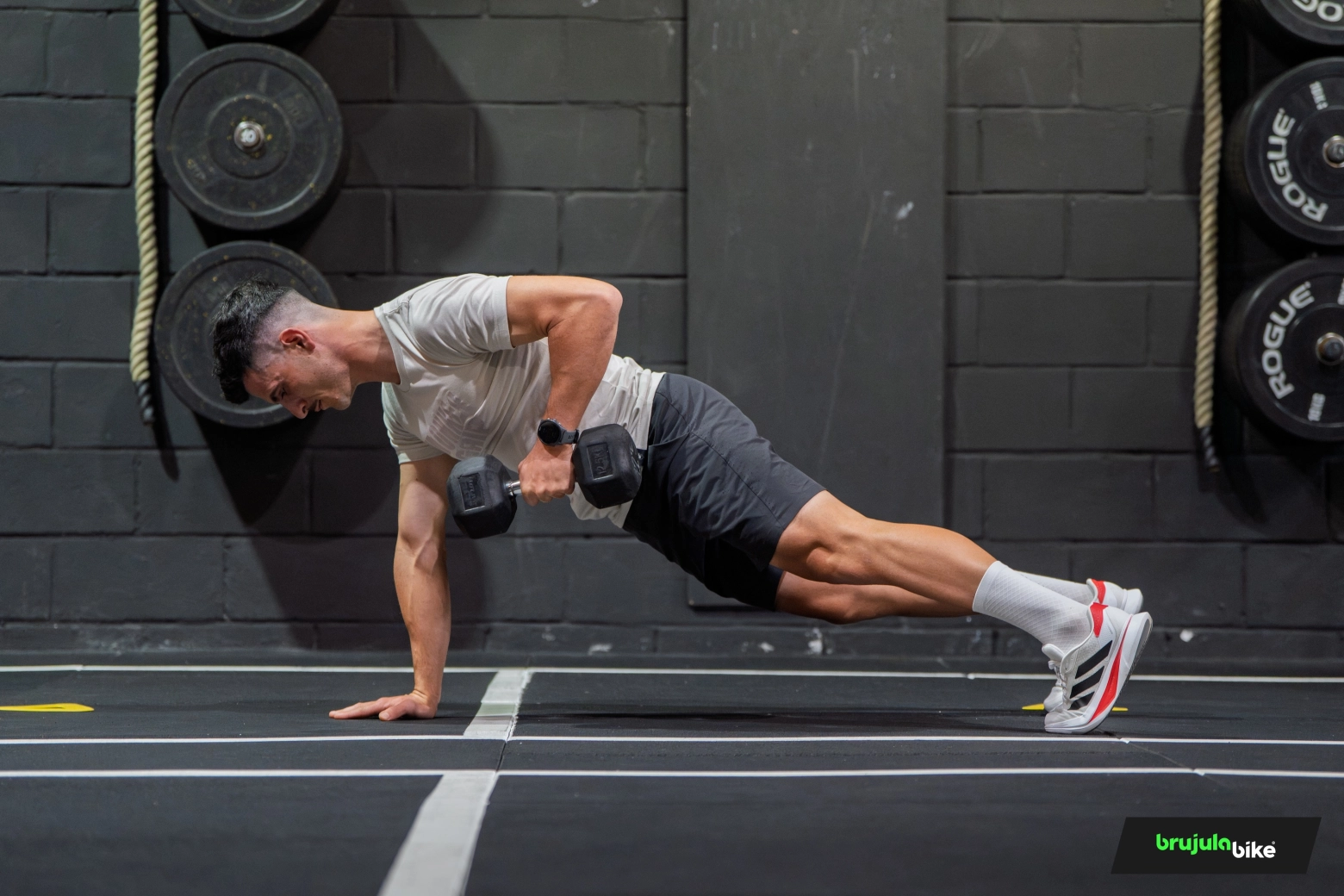
How to do it:
- Get into a plank position, with one hand on the dumbbell and the other on the ground.
- Maintain a straight line from head to heels, with your feet slightly wider than shoulder-width.
- Pull your elbow back until the dumbbell touches your side and lower it with control.
- Repeat 8–10 times per side, avoiding rotating your hips.
Imagine your belly button is always pointing to the ground. If it rotates, you lose the purpose of the exercise.
5. Double Crunch
- What it works: rectus abdominis, hip flexors, and anterior core control.
- Why it helps the cyclist: it reinforces the ability to keep the pelvis stable during intense efforts and improves power transmission when you stand up from the saddle.
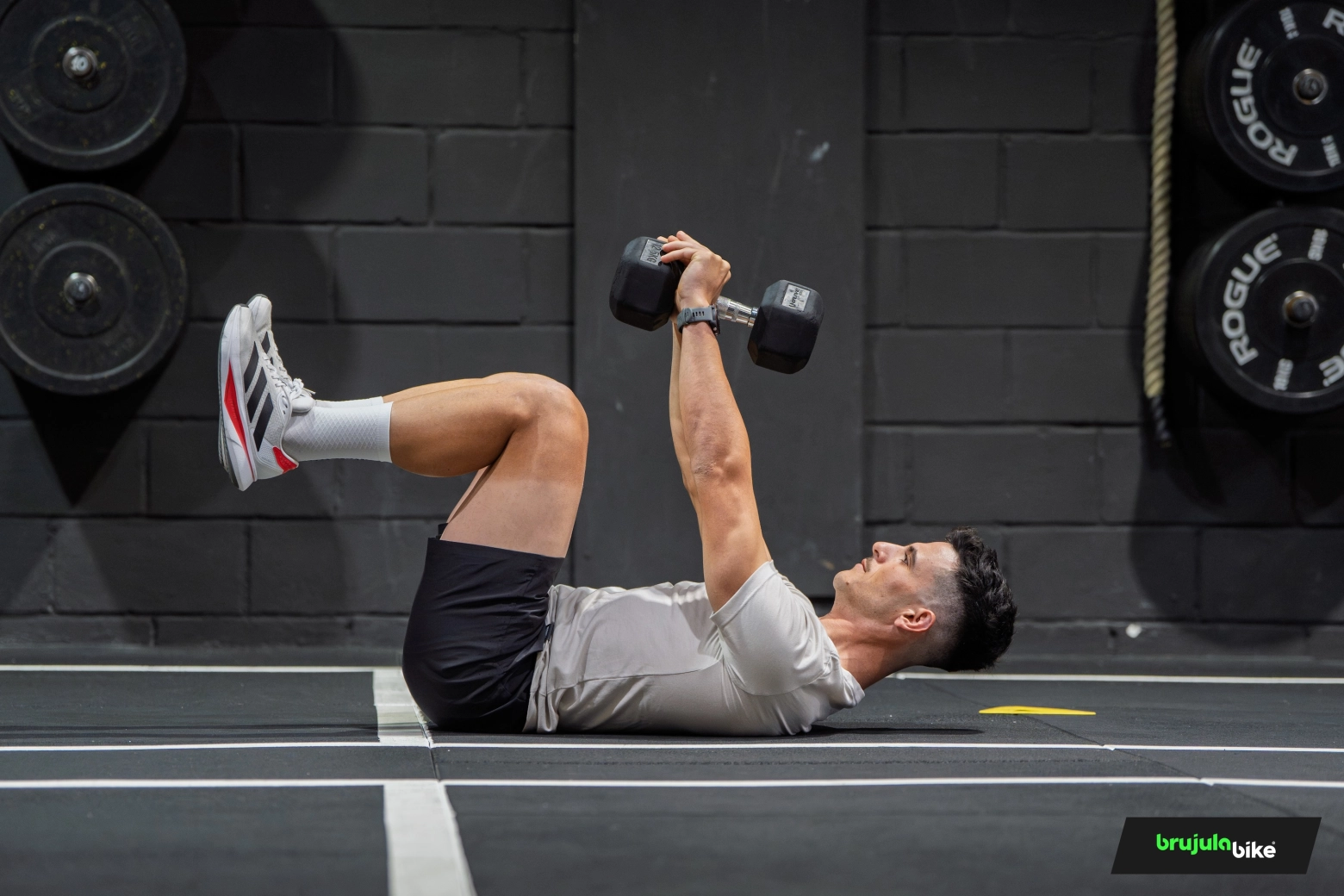
How to do it:
- Lie on your back, holding a dumbbell with both hands behind your head.
- Bend your knees to 90°, with your feet elevated.
- At the same time as you bring the dumbbell over your chest, do a crunch by lifting your shoulders and bringing your knees towards your trunk.
- Lower slowly until your arms and legs are extended without touching the ground.
- Do 12–15 repetitions.
- Control the descent. The real strength is in resisting, not in rising quickly.
6. Hollow Body with Weight
- What it works: deep abdominals, trunk control, and spinal stability.
- Why it helps the cyclist: it strengthens the base of the abdomen, key for maintaining an aerodynamic posture and absorbing vibrations without fatiguing the lumbar area.
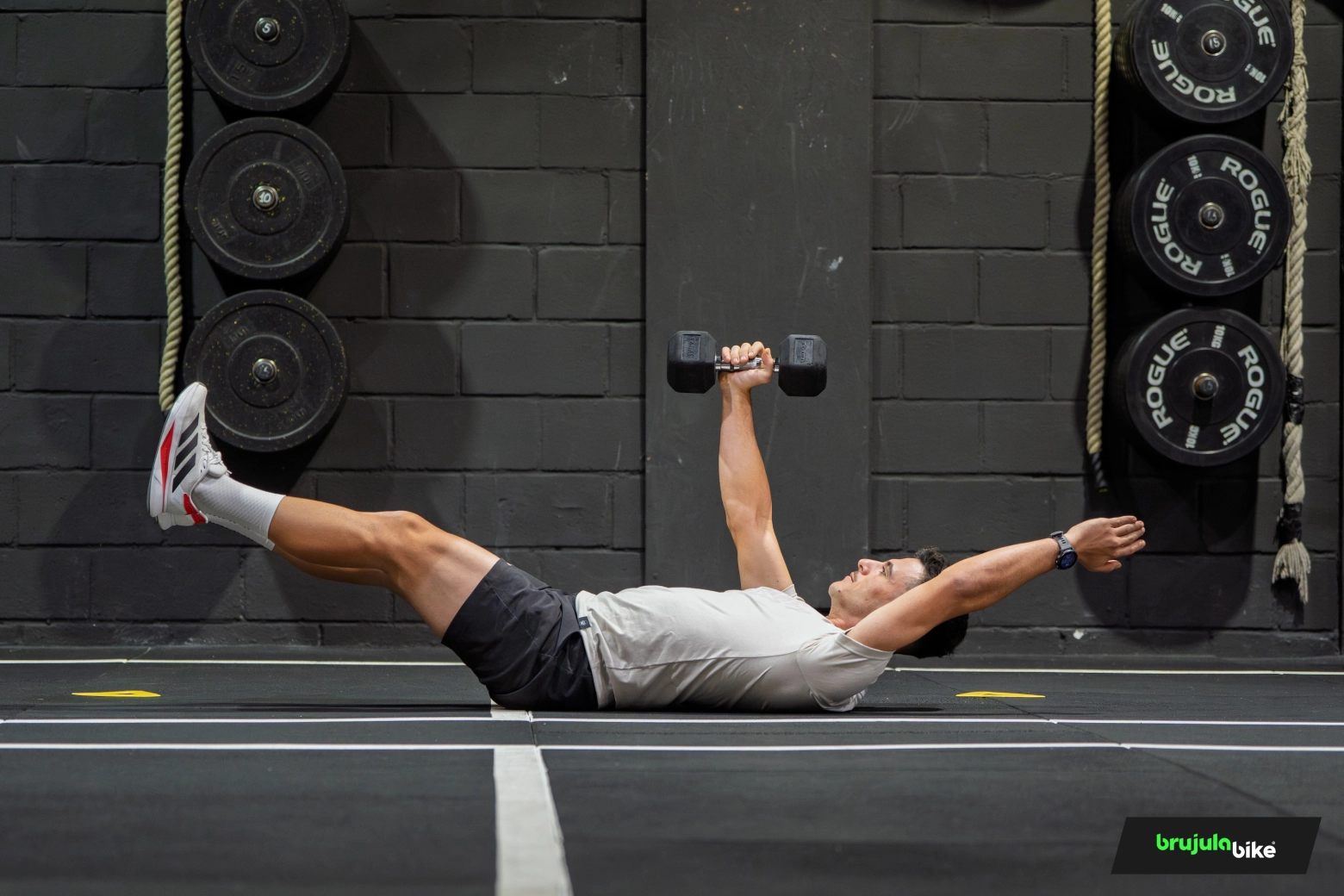
How to do it:
- Lie on your back and hold the dumbbell with one hand over your shoulder.
- Lift your legs and shoulders a few centimeters off the ground, keeping your abdomen contracted.
- Perform a gentle swing forward and backward, without losing the "boat" shape.
- Switch the dumbbell to the other hand halfway through the set.
- Do 8–10 repetitions per side.
- Do not let your back arch; if it does, reduce the range or use less weight.
In a few weeks, you will notice an improvement in your stability on the bike, especially when pedaling standing or on bumpy sections.
You can incorporate this circuit twice a week in the preseason and maintain it once a week during the season. It’s the kind of work that shows results without taking energy away from the main training.
Make them part of your routine and you will notice how, without realizing it, you pedal more firmly, more steadily… and with a few extra watts for free.
También puede interesarte
Training
What happens if you exceed your maximum heart rate? Risks of pushing yourself to the limit
Nutrition
What are nitrates and why will they give you an extra boost in your performance on the bike?
Mechanics
How to wash your bike at a gas station without ruining it
Training
Tips for staying motivated to go out riding when cold, rain or night lurk
Mechanics
How to choose the right crankset and cassette: a guide to find the right ratio and extend the life of your bike
Road